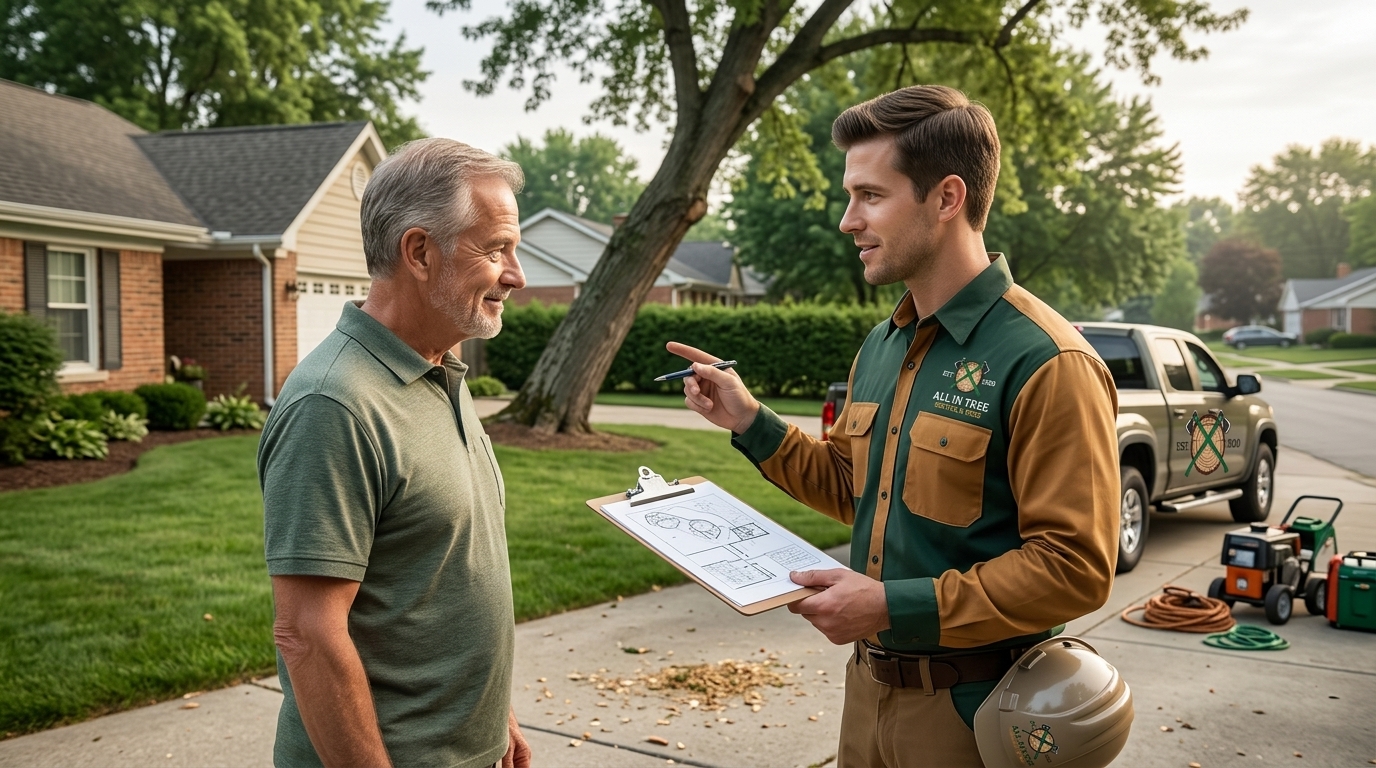
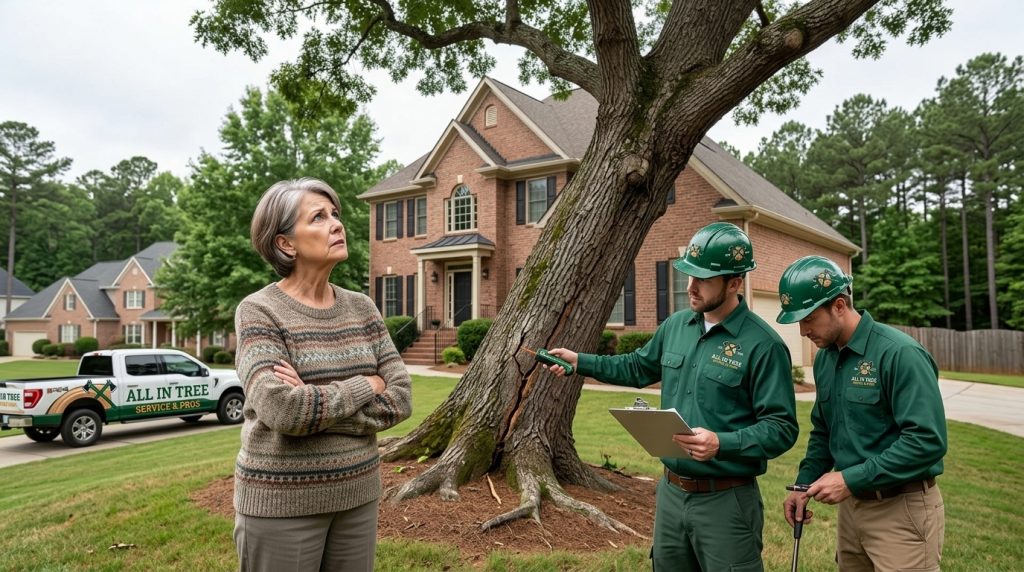
I’m Rudy Perez, owner of All In Tree Services and Pro. Over 15 years of tree work across Metro Atlanta, I have evaluated hundreds of leaning trees. Some have stood safely for decades. Others were 48 hours from falling. The difference depends on why the tree is leaning and what is happening underground. This guide will help you figure out which situation you are dealing with and what to do about it.
Natural Lean vs. Sudden Lean: The Critical Difference
There are two very different types of lean, and confusing them can cost you a roof or cause you to remove a perfectly healthy tree.
Natural Lean
Many trees grow at an angle on purpose. A tree in a shaded area will grow toward the nearest light source, bending its trunk gradually over years. Trees on slopes develop a lean as they grow perpendicular to gravity.
A naturally leaning tree has built compensating wood along its trunk and adapted its root system to the weight distribution. The trunk curves gradually from the base, and the roots on the opposite side are often larger and more pronounced.
I see natural leans constantly in yards across Powder Springs and Smyrna. Large oaks that have leaned 10 or 15 degrees for 40 years are generally fine. The tree grew that way, and its structure supports it. A leaning tree is often a tree that was planted too close. Learn more in our tree too close to house guide.
Sudden Lean
A sudden lean happens when something changes at the root or trunk level and the tree shifts from its established position. A tree that was standing straight last month and is leaning today has a structural problem and is actively failing.
If a tree on your property has developed a new lean that was not there before, treat it as an emergency. Keep your family away from the area between the tree and the structure, and contact an emergency tree removal service right away.
What Causes a Tree to Suddenly Lean
A tree does not lean on its own without a reason. Something changed. Here are the most common causes I see across our service area.
Root Damage from Construction or Digging
A new driveway, patio, pool, or utility line can sever critical anchoring roots. The tree may look fine for months, then a wind event pushes it past the tipping point. I have seen this in Hiram and Villa Rica: a homeowner puts in a fence line near a large pine, the contractor cuts through a major root, and six months later the tree is leaning after a thunderstorm.
Saturated Soil and Georgia Clay
Georgia clay retains water like a bowl. After heavy rain, saturated clay loses its grip on the root ball, and a tree that has been solid for years can shift in soil that has turned to mud. This is especially common in low-lying yards and properties with poor drainage. A week of steady rain followed by a strong thunderstorm is the exact combination that produces sudden leans across Metro Atlanta.
Root Rot and Fungal Decay
Root rot works silently. Fungi attack the root system underground, hollowing out roots you cannot see. The canopy may still look green because the crown is the last part to show symptoms. By the time the tree starts leaning, a significant portion of the root system may already be gone. Armillaria (honey fungus) and Phytophthora root rot both thrive in Georgia’s warm, moist conditions.
Storm Damage
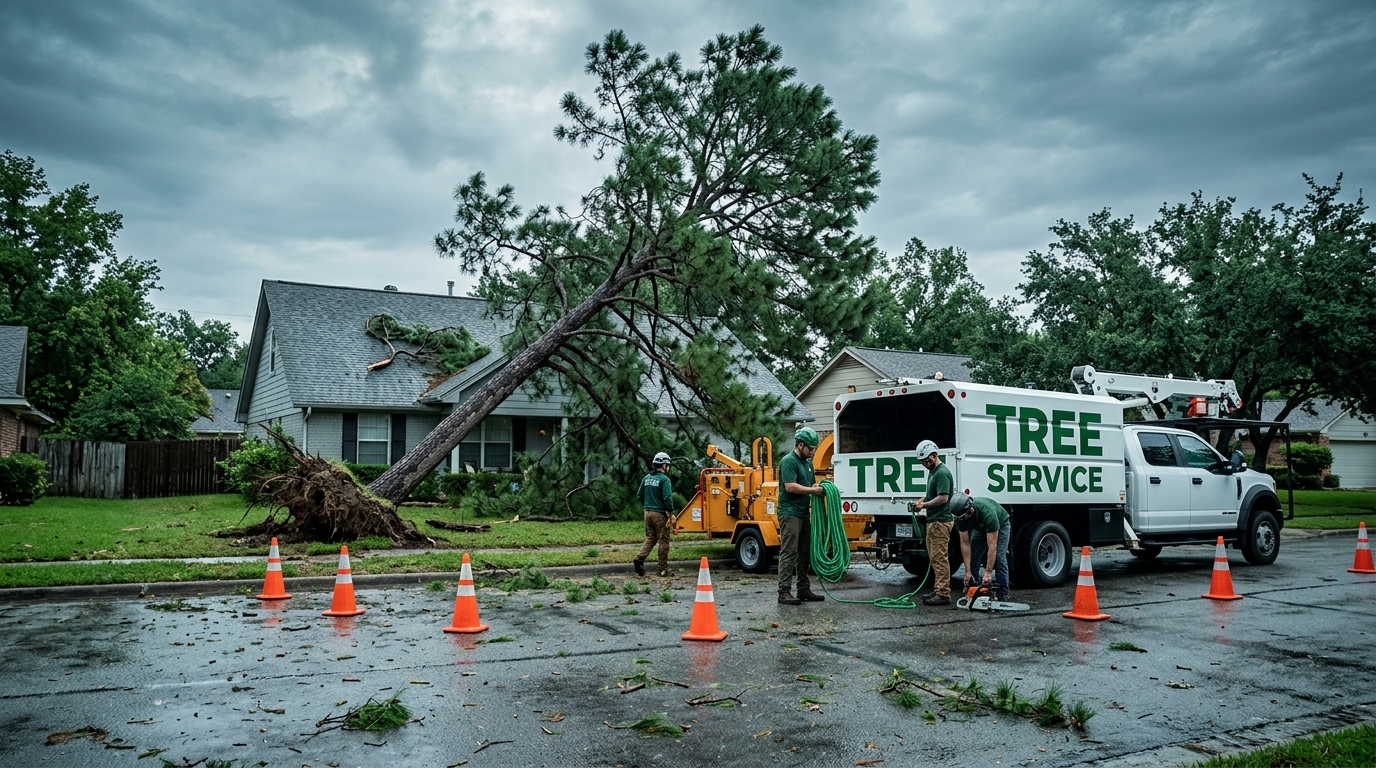
Straight-line winds, microbursts, and tornadoes can partially uproot a tree, leaving it leaning but standing. Rain fills the gap where roots pulled out, further loosening the anchor. These trees often fail completely during the next wind event. If a storm shifted a tree near your house, do not assume it will settle back. Read our guide on what to do if a tree falls on your house so you are prepared.
Soil Compaction
Heavy equipment or repeated vehicle traffic can compact soil around tree roots. Compacted soil restricts root growth and weakens the anchor over time.
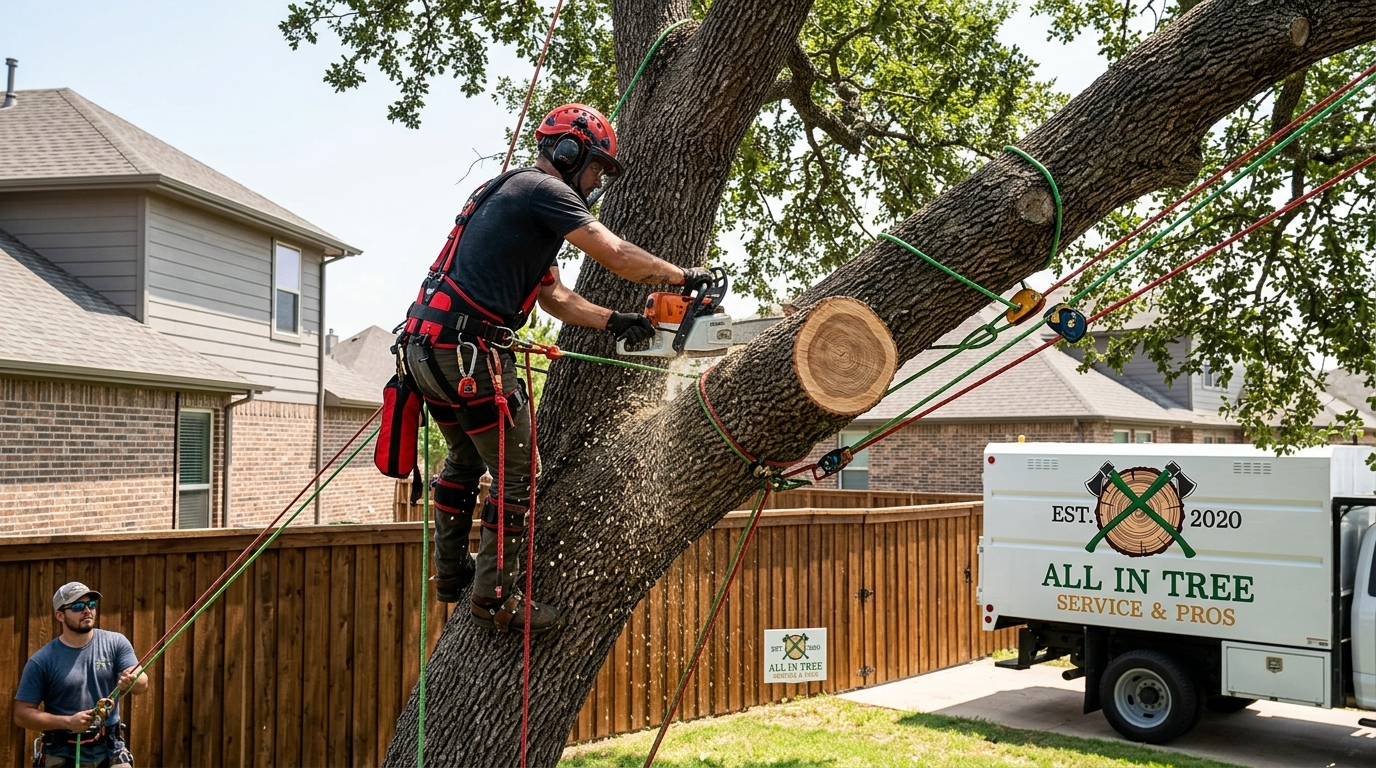
How to Assess a Leaning Tree Yourself
You do not need to be an arborist to spot the warning signs. Here is what to look for when you walk around a tree that is leaning toward your house.
Check the Soil at the Base
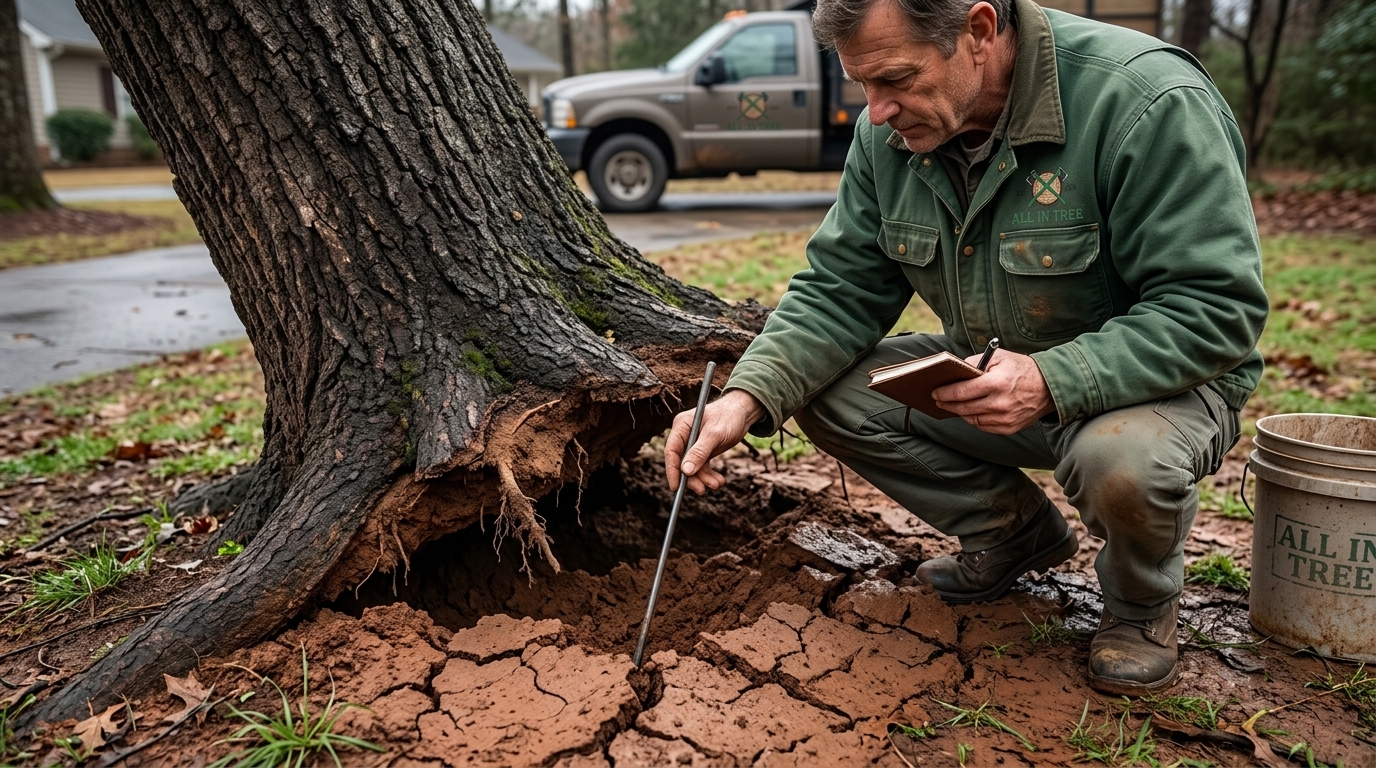
- Cracked or heaving soil on the side opposite the lean means the root plate is lifting. The roots are losing their grip.
- A gap between the trunk base and the soil on the lean side indicates the tree has shifted from its original position.
- Mounding soil on the lean side suggests the root ball is rotating.
If you see cracked or heaving soil, the anchor system is actively failing.
Examine the Trunk
- Vertical cracks along the trunk mean wood fibers are separating under stress. This indicates structural failure in progress.
- Fungal growth (mushrooms, conks, brackets) at or near the base signals internal decay. The trunk or root crown may be hollow.
- Cavities or soft spots reduce the trunk’s ability to support canopy weight under wind load.
Bark falling off in large patches on an otherwise live tree can indicate damage underneath.
Measure the Lean Angle
Stand back and estimate the angle from vertical.
- Less than 5 degrees: Low concern if the lean is natural with no other symptoms.
- 5 to 15 degrees: Moderate concern. Worth a professional evaluation, especially if new or increasing.
- 15 degrees or more: High risk. A tree leaning this far with any root or trunk symptoms has a strong chance of failure. Get a professional out quickly.
Look at the Canopy
- One-sided canopy growth matching the lean direction adds weight on the heavy side.
- Dead branches on one side may indicate root damage below.
- A full, heavy canopy on a compromised root system acts like a sail, multiplying the forces pulling the tree over.
Check After Rain and Wind
Evaluate the tree right after heavy rain or a wind event. If the lean appears worse after rain, the root system is not holding.
When a Leaning Tree Can Be Saved
A lean does not automatically mean the tree has to come down. Some leaning trees can be stabilized and maintained for years. Here are the situations where saving the tree is a realistic option.
Cabling and Bracing
Cabling involves installing steel cables high in the canopy to reduce load on the leaning side. Bracing uses threaded rods through weak branch unions to hold them together. These systems do not fix the lean, but they limit further movement and reduce the chance of failure during storms.
Cabling and bracing work best on trees with a natural lean and strong root systems, codominant stems that could split, or valuable specimen trees worth preserving. They do not work on trees with significant root failure or trunk decay.
Corrective Pruning
Strategic tree trimming can reduce weight on the leaning side of the canopy. Removing heavy limbs on the lean side reduces the pulling force. Pruning alone will not fix a tree with root failure, but combined with cabling, it can extend the life of a tree that is structurally sound at the base.
Soil and Root Care
If poor drainage or soil compaction contributed to the lean, improving drainage and aerating soil around the root zone can help stabilize the tree. This works for trees with waterlogged soil but an intact root system.
When a Leaning Tree Must Come Down
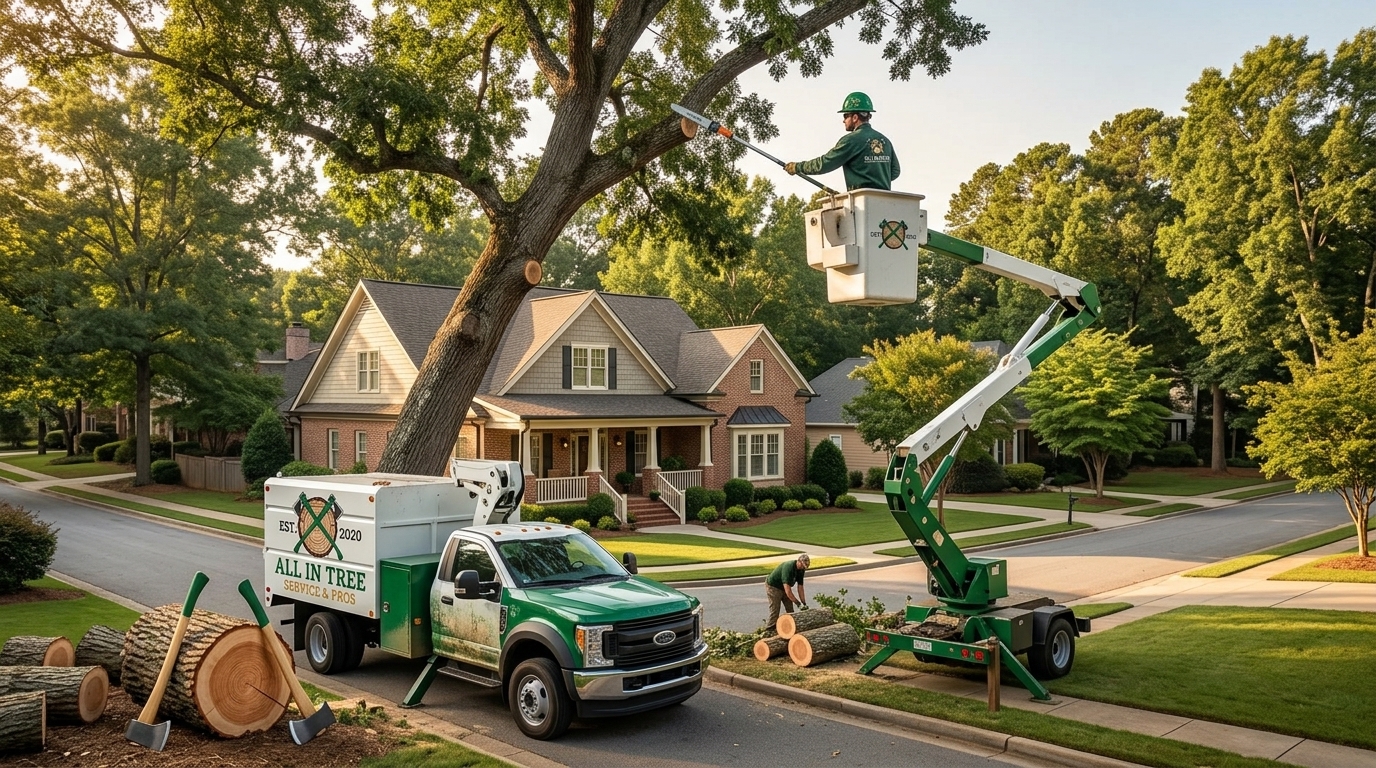
This is the part most homeowners need to hear. Some leaning trees cannot be saved, and waiting only increases the risk and the cost. After 15 years of doing this work, I can tell you that the hardest calls are the ones where someone waited too long.
Structural Root Failure
If major anchoring roots are broken, rotted, or severed, the tree has lost its foundation. No amount of cabling or pruning will restore a failed root system. You will see this as heaving soil, a lifting root plate, or visible broken roots on the side opposite the lean.
Significant Trunk Decay
If you can push a screwdriver into the trunk, if fungal conks are growing at the base, or if a professional finds that more than a third of the trunk cross-section is hollow, the tree is a removal candidate. Decay weakens wood from the inside out, and the trunk can snap without warning.
The Lean Is Increasing
A tree that leaned 8 degrees in January and leans 12 degrees in March is actively moving. Progressive lean means the root system or soil conditions are deteriorating. Mark the current angle with a photo and check it regularly. If it is changing, call for professional tree removal.
Proximity to Structures
A leaning tree in the middle of five acres is a different risk calculation than one 20 feet from your bedroom. In our service area across Mableton, Fayetteville, and surrounding communities, most lots are compact enough that a large tree can reach the house. If a tree leans toward a structure and shows any root, trunk, or soil problems, removal is the responsible choice.
Multiple Warning Signs
A single symptom may be manageable. But a 12-degree lean combined with fungal growth at the base and cracked soil on the opposite side is telling you exactly what is about to happen.
How We Remove a Leaning Tree
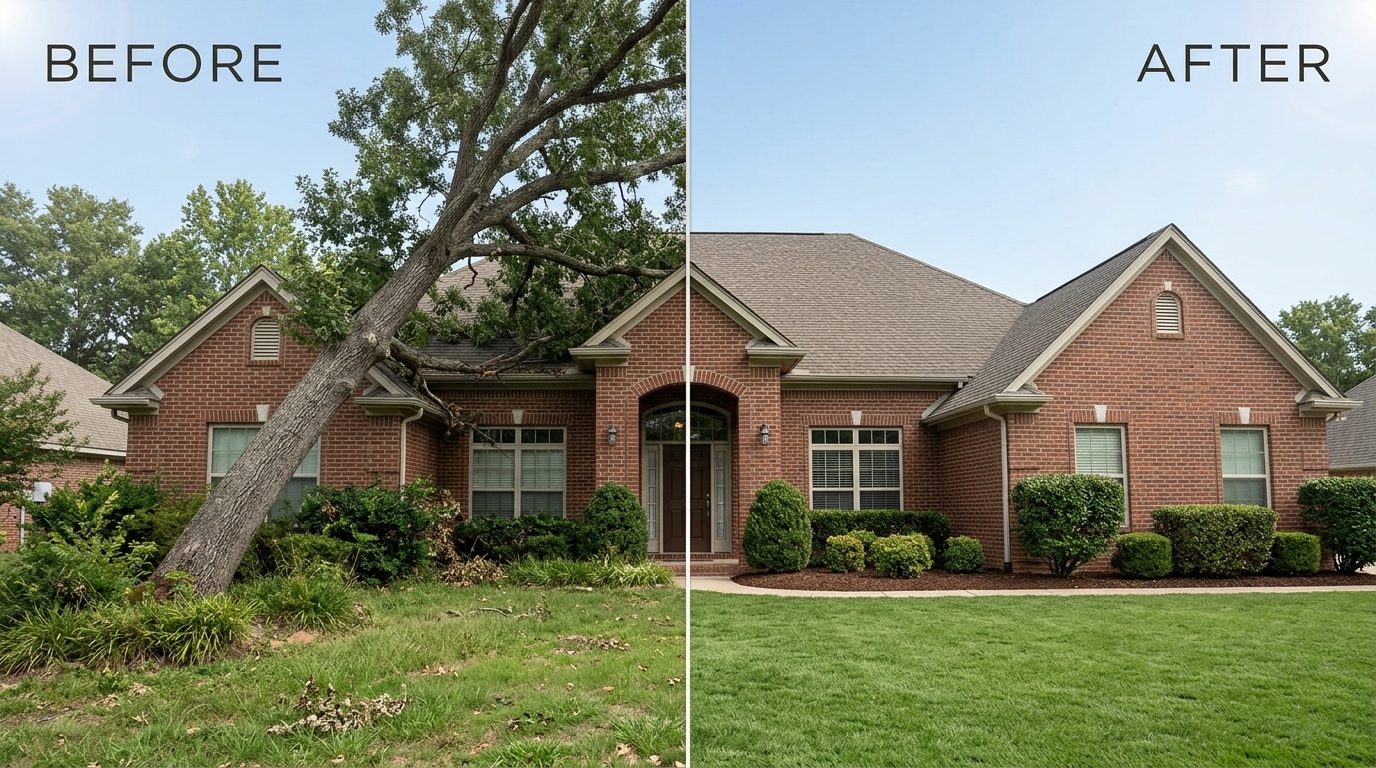
Removing a leaning tree near a house requires more planning than a standard removal. The tree wants to fall in the direction of the lean, and your house is in the way. Our job is to prevent that.
Directional Felling
If the tree has enough clear space and the lean is manageable, we use precise notch cuts, back cuts, wedges, and ropes to guide the tree away from the structure. This works for smaller trees with a modest lean and a clear drop zone on the opposite side.
Rigging and Sectional Removal
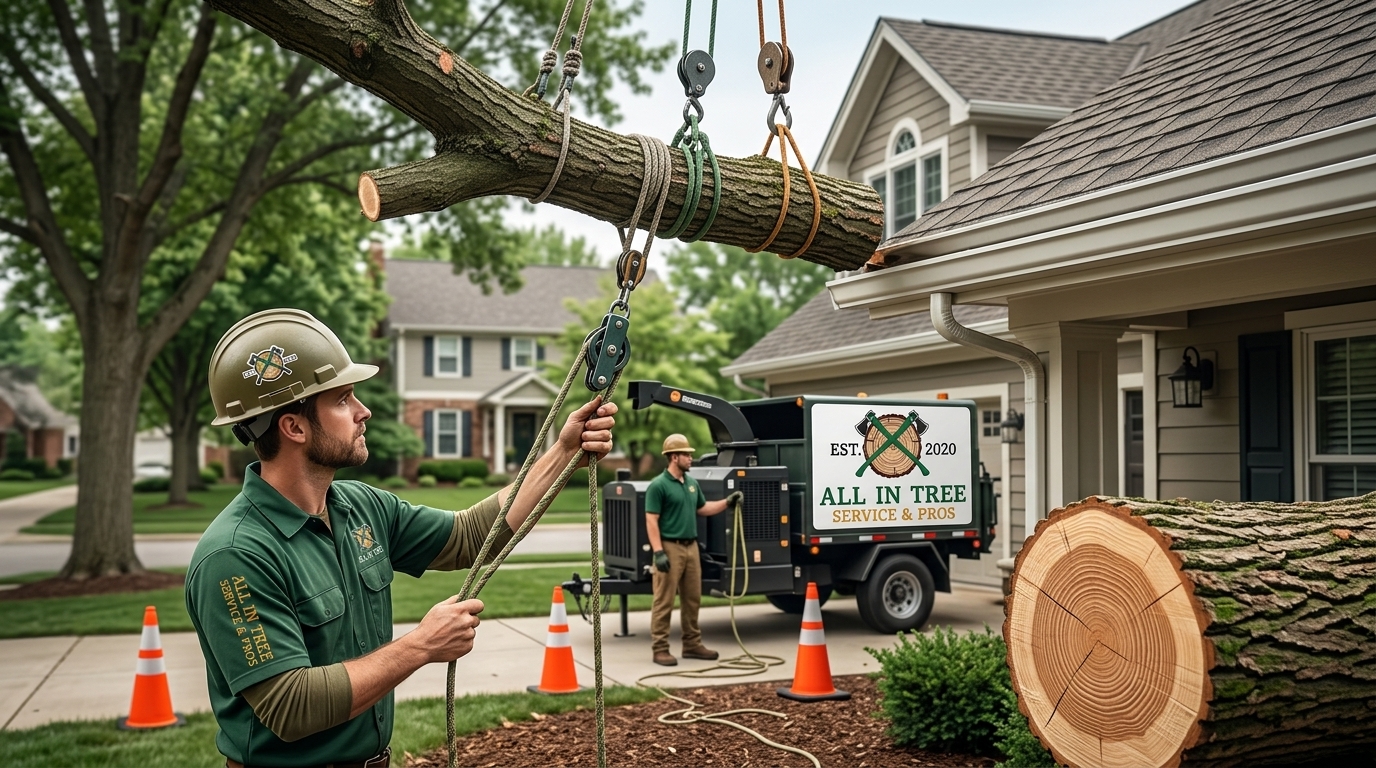
For larger trees or tight lots with no clear drop zone, we take the tree apart in sections from the top down. Each piece is rigged with ropes and lowered in a controlled direction. This is slower than felling the whole tree, but it gives us complete control over where every piece goes. We use this approach on most leaning tree removals across Powder Springs, Smyrna, and Hiram, where lots are tight and there is rarely room to drop a 60-foot tree safely.
Crane-Assisted Removal
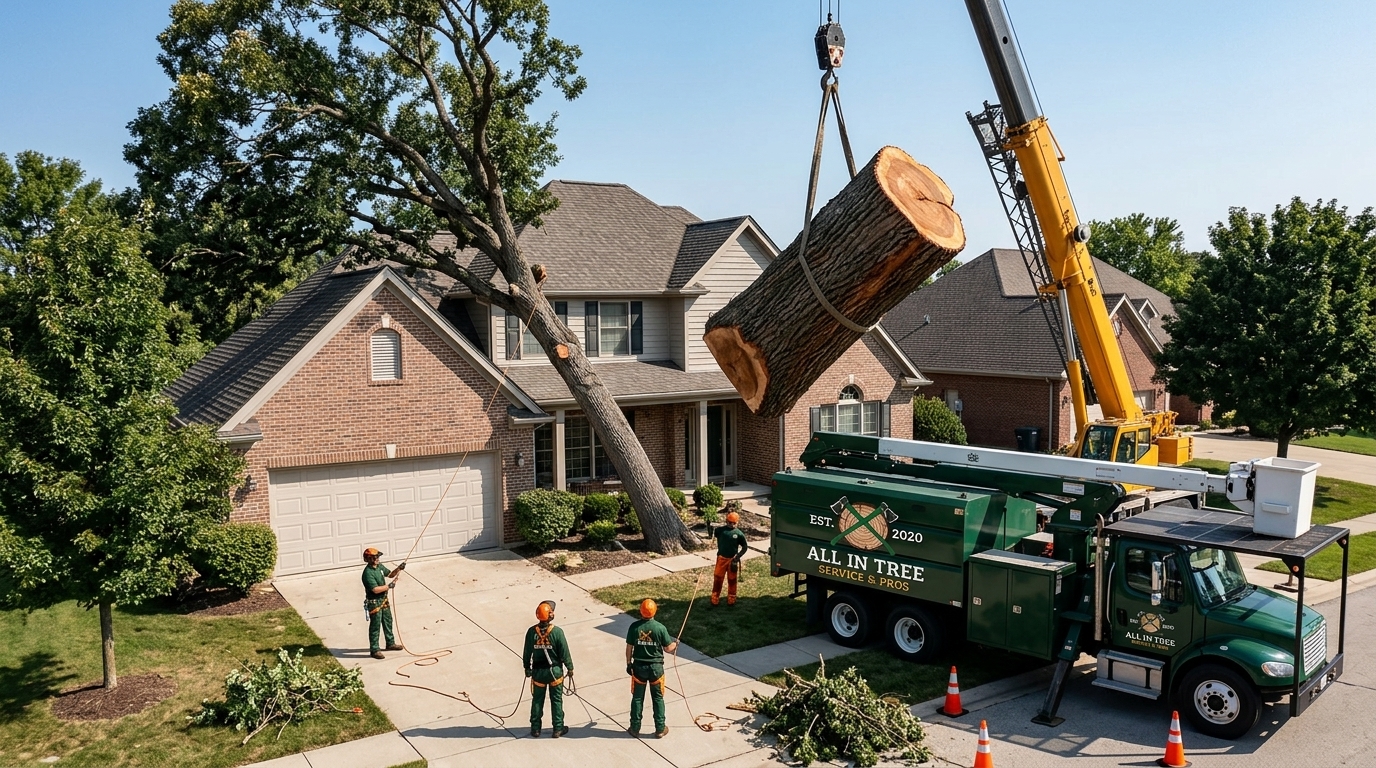
For very large trees leaning directly over structures, or situations where climbing is too dangerous, we bring in a crane. The crane lifts sections straight up and away from the house, eliminating the risk of the trunk swinging toward the structure. Crane removal is the safest option for high-risk jobs and is often faster than extended rigging, which can offset some of the added equipment cost.
Stump Removal
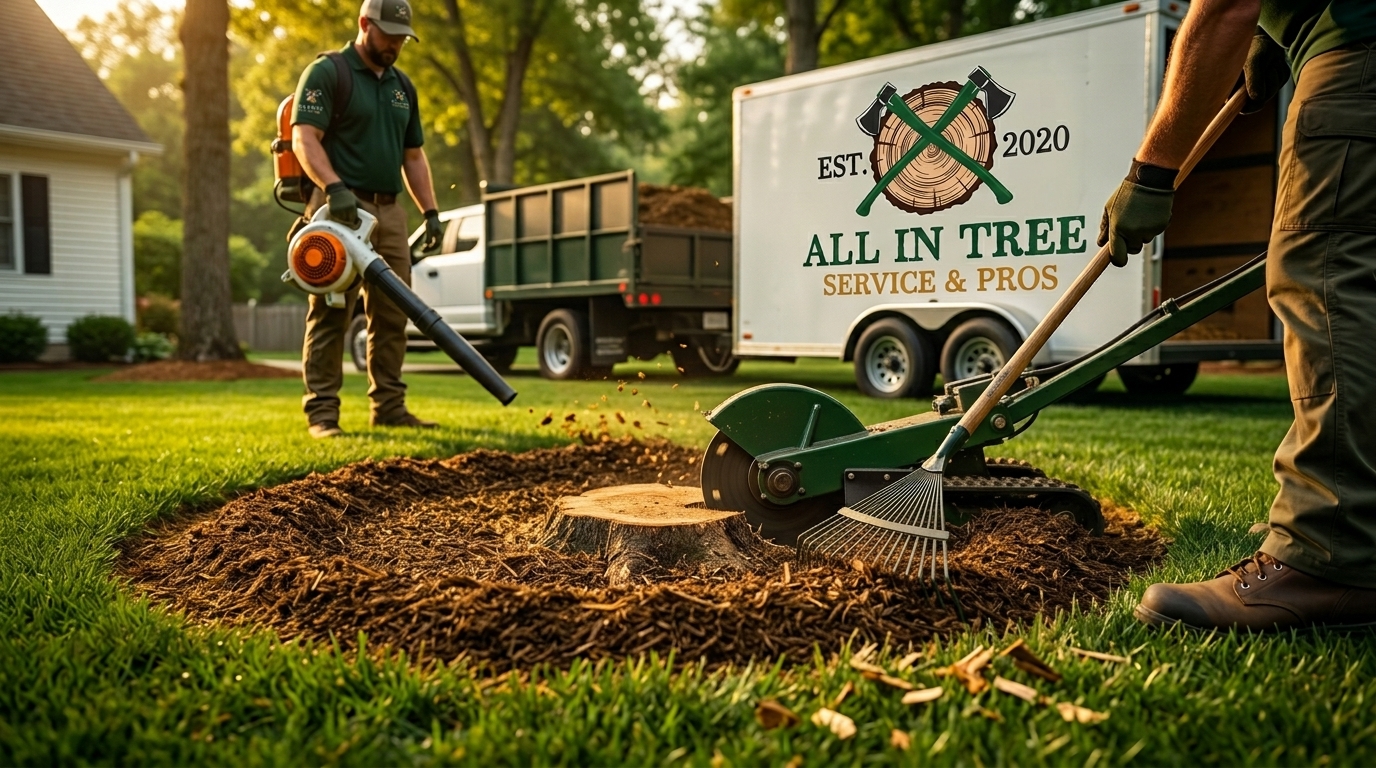
After the tree comes down, the stump remains. Stump grinding removes it below grade so you can replant or landscape. If the tree had root rot, grinding also helps prevent the fungus from spreading to nearby trees.
What Leaning Tree Removal Costs
Every leaning tree removal is different. The main cost factors include:
- Tree size. A 30-foot pine costs less than a 70-foot oak. Taller, heavier trees require more labor, rigging, and time.
- Proximity to structures. Tight spaces mean slower, more precise work.
- Lean severity and condition. A tree with root failure is more dangerous to work on than one with a moderate natural lean.
- Access. Fenced yards, slopes, narrow side yards, and power lines add time.
- Crane requirement. Crane-assisted removal adds cost but is often the only safe option for large trees near houses.
- Emergency vs. scheduled. A tree about to come down today costs more than one you schedule two weeks out.
For a detailed breakdown, visit our tree removal cost guide. We provide free, written estimates for every job. We walk the property, assess the tree, and give you a clear price before work starts.