Why the Timing of Tree Trimming Matters
Cutting branches at the wrong time of year can stress your tree, invite disease, or trigger weak regrowth. The right timing does the opposite. It helps the tree heal faster, promotes strong spring growth, and reduces the chance of fungal infections that thrive in Georgia’s humid climate.
Three things make timing especially important here:
- Disease prevention. Many fungal and bacterial infections spread through open pruning wounds. Some of these pathogens are most active during warmer months. Trimming during their dormant period reduces the risk.
- Less stress on the tree. Trees use stored energy to seal wounds and grow new tissue over cuts. During the dormant season (late fall through winter), energy demands are lower and the tree can direct more resources to healing.
Better visibility. Once leaves drop from deciduous trees, we can see the full branch structure clearly. Dead wood, crossing branches, cracks, and structural defects that hide under a full canopy become obvious. I can make better decisions about what to cut when I can see the whole picture.
The Best Time to Trim Trees in Georgia: General Rule
For most tree species in Georgia, the best time to trim is during the dormant season, roughly late November through February. Georgia’s winters are mild compared to the Northeast, but our trees still slow down their growth and drop leaves during this window.
The dormant season works well for several reasons:
- Insects that carry disease are less active
- Fungal spores are not spreading aggressively
- The tree is not pushing sap or actively growing, so it handles cuts better
- Cleanup is easier without a full canopy of leaves
That said, Georgia’s long growing season and humid climate create some species-specific exceptions. I walk through those below.
Species-Specific Trimming Schedules for Georgia Trees
Oaks: December Through February
The best time to trim oak trees in Georgia is during the coldest months, December through February. Oak wilt, a serious fungal disease, spreads through fresh pruning wounds during spring and summer when the beetles that carry it are active. Winter trimming avoids that risk almost entirely.
We work on oaks throughout Metro Atlanta, from old-growth white oaks in Smyrna to overgrown water oaks in Fayetteville. The pattern is consistent: homeowners who trim oaks during the dormant window deal with fewer disease issues and stronger regrowth.
For a deeper look at oak-specific timing, pruning methods, and oak wilt prevention, read our full oak trimming guide.
Pines: Late Winter Before Spring Growth
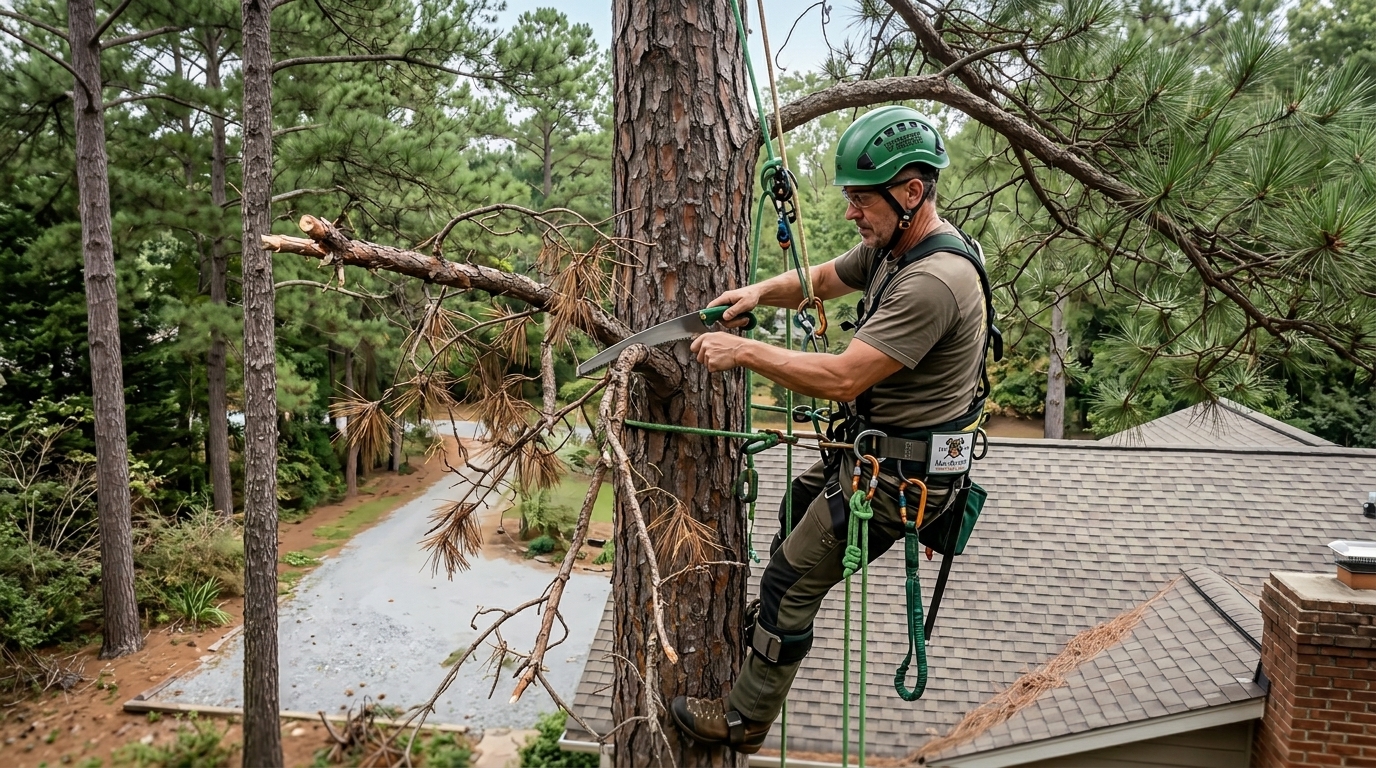
Georgia is full of loblolly pines, shortleaf pines, and longleaf pines. The best time to trim them is late winter, typically February into early March, just before new candle growth starts in spring.
Pines do not need regular shaping the way hardwoods do. Most pine trimming is about removing dead lower branches, clearing limbs away from structures, and reducing weight on branches that extend too far over roofs or driveways. Late winter is ideal because:
- Bark beetles are less active in cold weather
- The tree is about to push new growth, which helps seal pruning cuts quickly
- Dried-out deadwood is easier to identify and remove
If you have tall pines close to your home, regular deadwood removal is one of the best storm-prep steps you can take. We see the same pattern every year: customers put off that dead pine branch until a thunderstorm sends it through a window.
Maples: Late Summer or Dormant Season
Maples are “bleeders.” If you prune a maple in late winter or early spring, sap will flow heavily from the cuts. The bleeding itself does not usually kill the tree, but it weakens it and creates a mess. I have walked up to jobs in Hiram and Powder Springs where someone trimmed a maple in February and sap was dripping for weeks.
The two best windows for maple trimming in Georgia are:
- Late summer (July through August): Sap flow has slowed, the tree is still in active growth, and wounds close quickly
- Late dormant season (late January through early February): Before sap starts rising. If you choose this window, schedule early in winter rather than waiting until late February when sap begins to move
Avoid pruning maples in March through May. That is peak sap season.
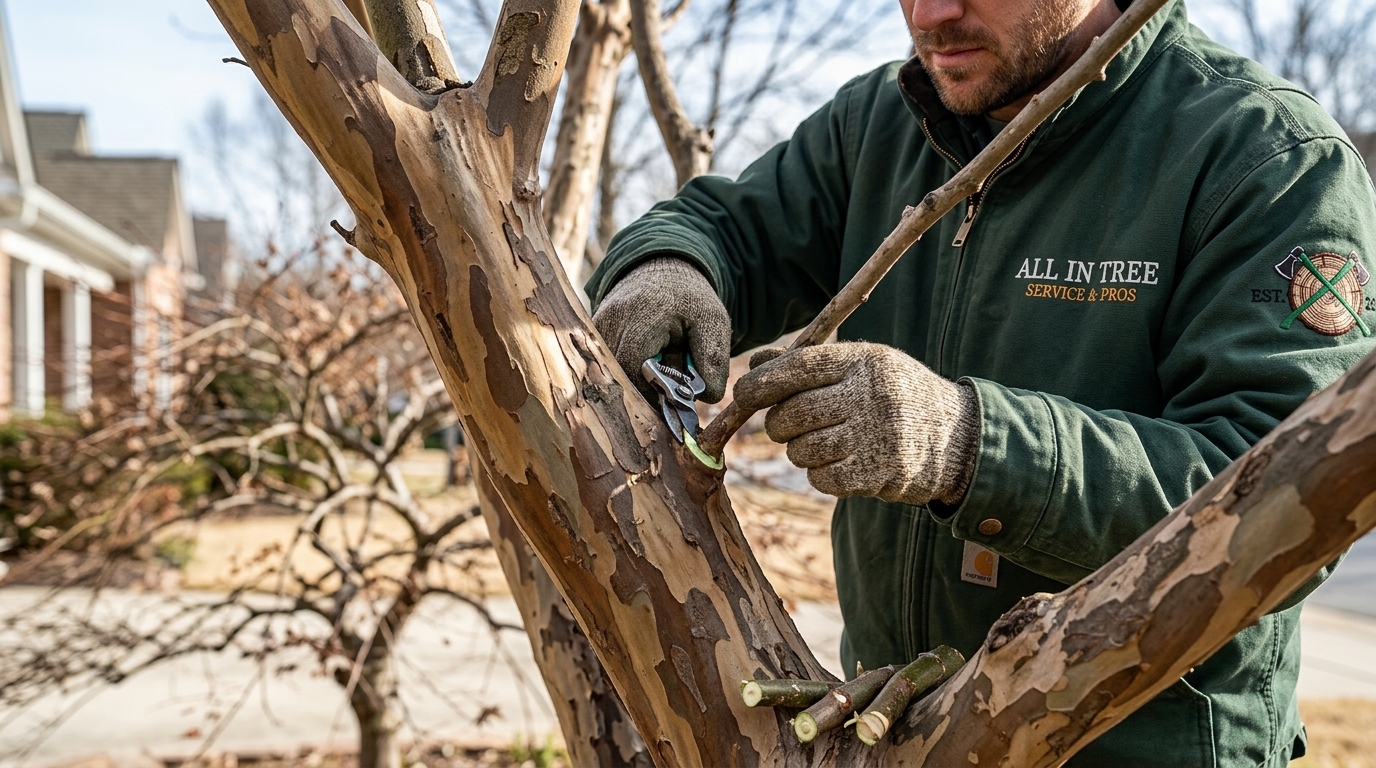
Crape Myrtles: Late Winter (February)
Crape myrtles are one of the most popular ornamental trees in Georgia, and February is the best month to trim them. The tree is still dormant, and pruning before new growth starts encourages stronger blooms during the summer.
A note on “crape murder.” Every year I see crape myrtles that have been chopped down to thick stubs, sometimes 3 or 4 feet above the ground. This practice is called “crape murder” in the tree care industry, and it causes real problems:
- The tree sends up thin, whip-like shoots from the cuts that are structurally weak
- Those weak shoots droop under the weight of flowers, creating an awkward shape
- The tree develops large, ugly knobs at the cut points over time
- Repeated topping weakens the tree’s root system and shortens its lifespan
Proper crape myrtle pruning involves removing crossing branches, thinning interior growth for air circulation, and taking out suckers at the base. We remove branches selectively, keeping the natural vase shape that makes crape myrtles look their best. If your crape myrtles have been topped in the past, we can start corrective pruning to restore a healthier growth pattern over two to three seasons.
Fruit Trees: Late Winter Before Bud Break
Peach, apple, pear, and plum trees all benefit from late winter pruning, typically late January through mid-February in Georgia. The goal is to prune after the coldest weather has passed but before buds start swelling.
Fruit tree pruning focuses on:
- Opening up the center of the canopy so sunlight reaches more fruit
- Removing water sprouts (those straight vertical shoots)
- Cutting out dead, damaged, or diseased branches
- Keeping the tree at a manageable height for harvesting
Georgia’s warm, humid summers make fungal diseases like brown rot and fire blight common in fruit trees. Pruning in late winter, before the tree leafs out, gives wounds time to dry and heal before the wet season arrives.
Evergreens: Late Spring After New Growth
Hollies, magnolias, camellias, and other broadleaf evergreens do best with late spring pruning, usually April through May, after the first flush of new growth. This lets you shape the tree based on where the new growth went and gives the plant a full growing season to fill back in.
Needle evergreens like arborvitae and Leyland cypress follow the same timing. Prune them after new growth extends but before it hardens off, usually late April through June.
One exception: if you need to trim a holly or magnolia for clearance (branches hitting a house, blocking a path), you can do that any time of year. Just avoid heavy shaping outside the spring window.
When to Trim Outside the Ideal Window
The dormant season is the best time to schedule trimming, but some situations cannot wait. You should call for professional tree trimming right away if you see any of these:
- Dead or hanging branches. A dead limb does not follow a seasonal schedule. It can snap off at any time, and removing it is safe for the tree year-round.
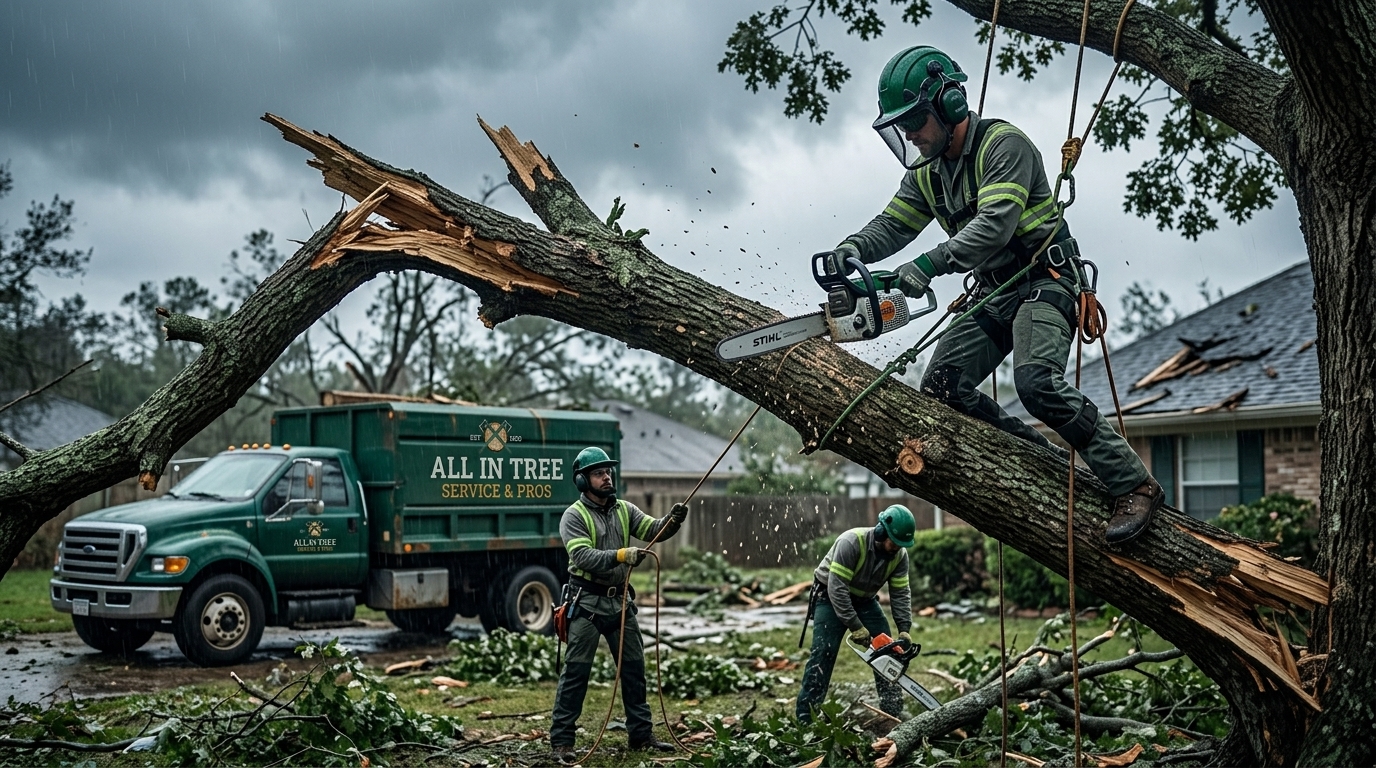
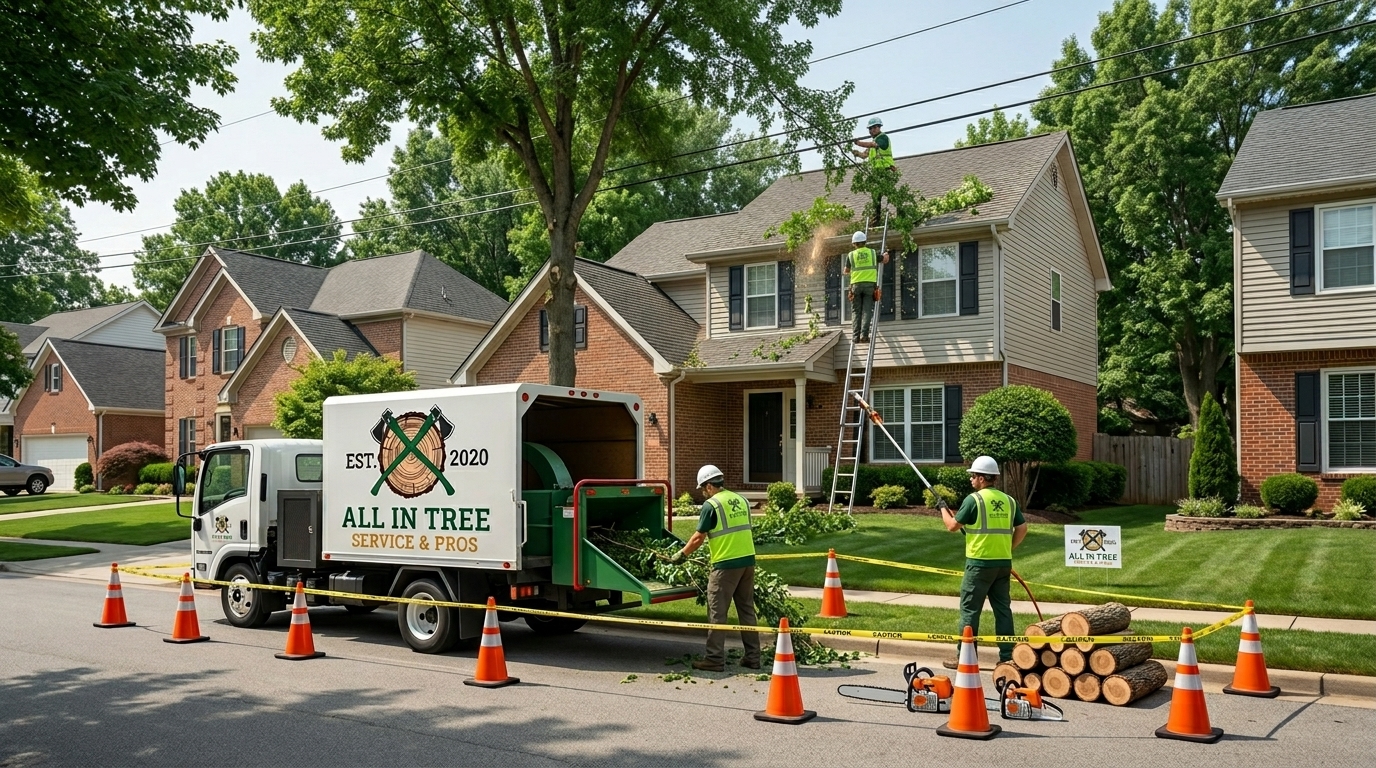
- Storm damage. Georgia’s storm season runs from roughly March through September. If a storm cracks a branch or splits a trunk, get it addressed immediately. Waiting invites decay and increases the risk of further failure. Our emergency tree removal crew handles storm damage year-round.
- Branches touching your house or roof. Branches rubbing against siding, gutters, or shingles cause damage over time and give rodents a bridge to your attic. Remove them whenever you notice the problem.
- Clearance issues. Branches blocking a driveway, hanging over a sidewalk, or growing into power lines need trimming regardless of the season.
Visible disease or insect damage.
If a branch shows signs of active disease (cankers, oozing sap, unusual discoloration, rapid dieback), removing it promptly can prevent the problem from spreading to the rest of the tree. Waiting until winter may let the infection grow.
Georgia’s Climate: Why It Changes the Rules
Georgia’s climate is different from what you will find in national gardening guides written for the Midwest or Northeast. Here is how our local conditions affect trimming timing:
Mild winters. Georgia rarely sees extended deep freezes. Our trees do not go as fully dormant as trees in colder states, which means the trimming window is slightly more flexible. December through February still works best, but trees here start waking up earlier, sometimes by late February in warm years.
Long growing season. Metro Atlanta has roughly 220 to 240 frost-free days per year. Trees grow aggressively from March through October, which means they produce a lot of new wood and need more frequent attention than trees in shorter-season climates.
Humidity and fungal disease. Georgia’s summers are hot and humid, which creates ideal conditions for fungal infections. Many common tree diseases (oak wilt, anthracnose, powdery mildew, bacterial leaf scorch) spread through pruning wounds during warm, wet weather. This is the biggest reason we push dormant-season trimming for most species.
Storm season. Severe thunderstorms, straight-line winds, and occasional tornadoes move through Georgia from March through September. Trees with deadwood, heavy canopies, or structural weaknesses are the most likely to fail during storms. Getting your trimming done in winter gives your trees the best chance of handling spring and summer weather.
I have worked through enough Georgia storm seasons to know the pattern. Homeowners who trim proactively in winter deal with far fewer emergency calls in summer. Homeowners who wait often end up calling us during a storm week when every crew in Atlanta is running full out and wait times stretch to several days.
Signs a Tree Needs Trimming Now (Regardless of Season)
Walk your property and look for these warning signs. If you spot any of them, call for an evaluation rather than waiting for the ideal trimming window.
- Dead branches in the canopy. Brown, brittle branches with no leaves during the growing season or bark falling off the limb.
- Crossing or rubbing branches. Two branches that rub together wear through bark and create entry points for disease and insects.
- Heavy lean that was not there before. A tree that suddenly starts leaning may have root damage or internal decay.
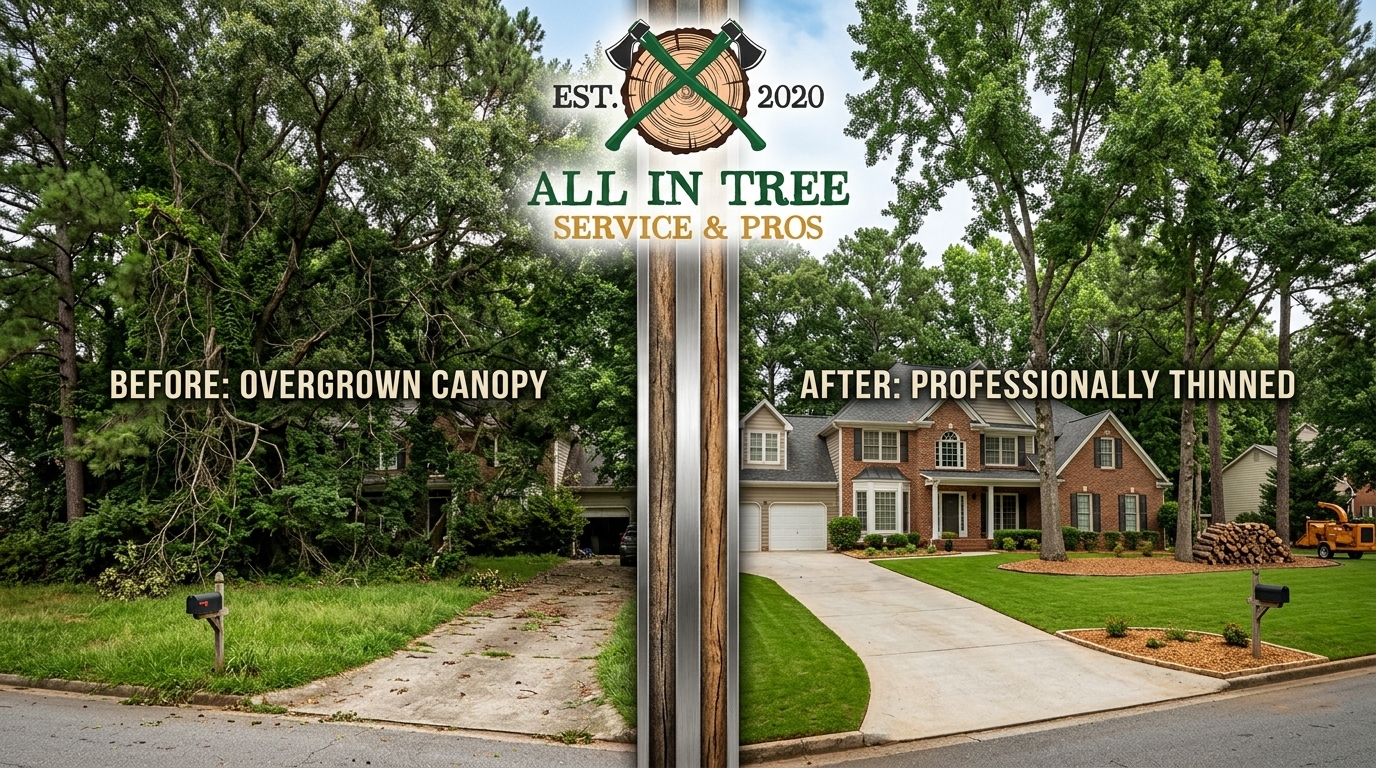
- Dense canopy blocking all light. An overgrown canopy holds moisture, promotes disease, and kills grass and plantings underneath. Thinning the canopy fixes all three.
- Branches within 10 feet of power lines. Contact your utility company or a qualified tree crew immediately. Do not attempt this yourself.
- Mushrooms or fungal growth at the base. This often signals internal decay in the trunk or root system. The tree may need more than trimming. It may need a full assessment and potentially tree removal.
- Cracks in major limbs or the trunk. A structural crack in a large branch can lead to sudden failure with no warning.
Last spring, a homeowner in Woodstock called us about a red oak with several large dead branches hanging over their patio. The tree was healthy overall, just overdue for maintenance. We thinned the canopy and removed the deadwood even though it was April, because dead branches are fair game any time. A few weeks later, a severe thunderstorm tore through the area. The homeowner told us the branches we removed were exactly the kind that come down in storms.
What Happens If You Trim at the Wrong Time?
Trimming at the wrong time usually will not kill a mature, healthy tree. But it can cause problems that compound over time:
- Excessive sap loss in maples and birches pruned during sap flow
- Increased disease risk for oaks trimmed during oak wilt season
- Weak, rapid regrowth from heavy pruning during the growing season (the tree sends out a rush of thin shoots to replace lost foliage)
- Reduced flowering in crape myrtles and fruit trees pruned too late in spring
One badly timed cut will not doom your tree. But repeated poor timing stacks up. I have seen trees in Villa Rica that were trimmed hard every summer for years. They developed dense clusters of weak shoots, thin bark, and visible decay at old cut points. Proper timing and technique could have avoided all of that.