
Why Hiram Properties Need Professional Tree Service
Hiram is not like the tight, quarter-acre subdivisions closer to Atlanta. Properties here tend to sit on half an acre, an acre, or more. Many were carved from wooded land decades ago, and the trees that were left standing have had years to grow into full-size hardwoods and tall pines. That is a good thing for shade and property value, but it also means you are living with large trees close to structures, driveways, septic systems, and power lines.
Three things set Hiram apart from the cities closer to the metro core:
Mature tree canopy on large lots. The oaks, hickories, and pines on a typical Hiram property are 50 to 80 feet tall. Trees that size require professional equipment to maintain. A 70-foot loblolly pine is not something you handle with a pole saw and a ladder.
Open land and storm exposure. Hiram properties sit on higher, more exposed ground than neighborhoods tucked into dense suburban corridors. Open land means less wind buffering from surrounding structures and trees. When a severe thunderstorm pushes through northwest Georgia, the trees on a Hiram property take the full force of it.
Mixed species with different needs. A single Hiram lot might have loblolly pines along the property line, a red oak shading the house, a couple of sweetgums in the backyard, and a stand of hardwoods along the fence. Each species has different growth habits, failure points, and maintenance schedules. A one-size approach does not work here.
I spend more time in a harness and in the bucket than I do in the office. The yards I see in Hiram consistently have the same patterns: big trees that have not been touched in years, dead limbs stacking up in the canopy, and pines leaning a few degrees more than the homeowner remembers.
Tree Removal in Hiram: Large Pines, Oaks, and Dead Trees
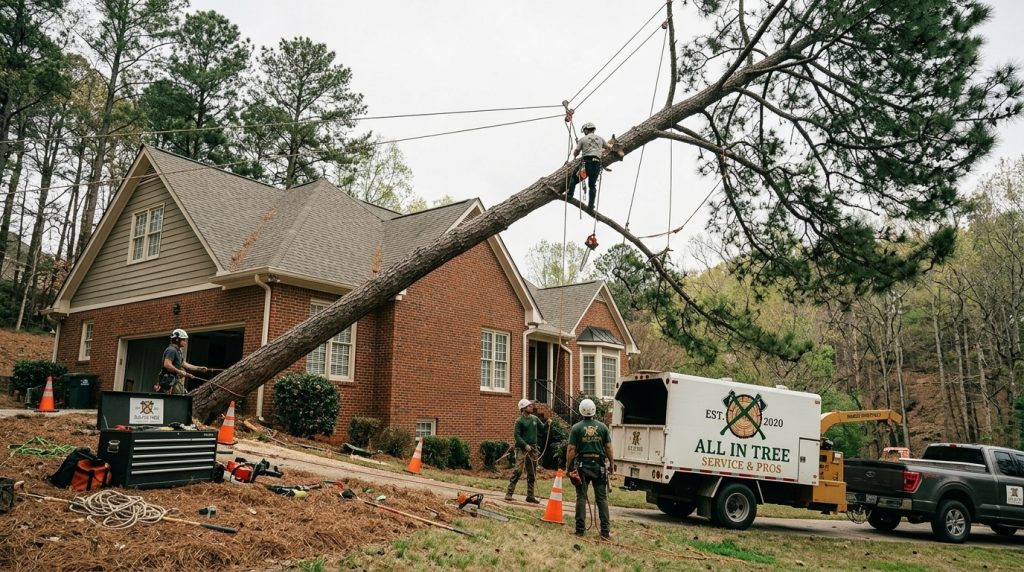
Tree removal is the most common service we provide in Hiram. The trees here are big, and when they need to come down, the job takes real planning.
Large Pine Removal
Loblolly pines are everywhere in Paulding County. They grow fast, they grow tall, and their root systems are shallow relative to their height. A healthy 80-foot pine is fine. A stressed, beetle-damaged, or storm-weakened pine is a falling hazard on a countdown timer.
We see the same pattern every year — customers put off that leaning pine until one bad storm finally takes it down. By then, it is on the fence, across the driveway, or worse. Removing a standing pine on your schedule costs less and is far safer than dealing with it after it falls.
Signs a pine needs removal:
- Browning needles starting at the crown and moving down
- Boring dust or pitch tubes on the bark (pine beetle activity)
- A visible lean that has increased over months
- Exposed or lifted roots on the uphill side
- Dead top with no green canopy remaining

Oaks Near Structures
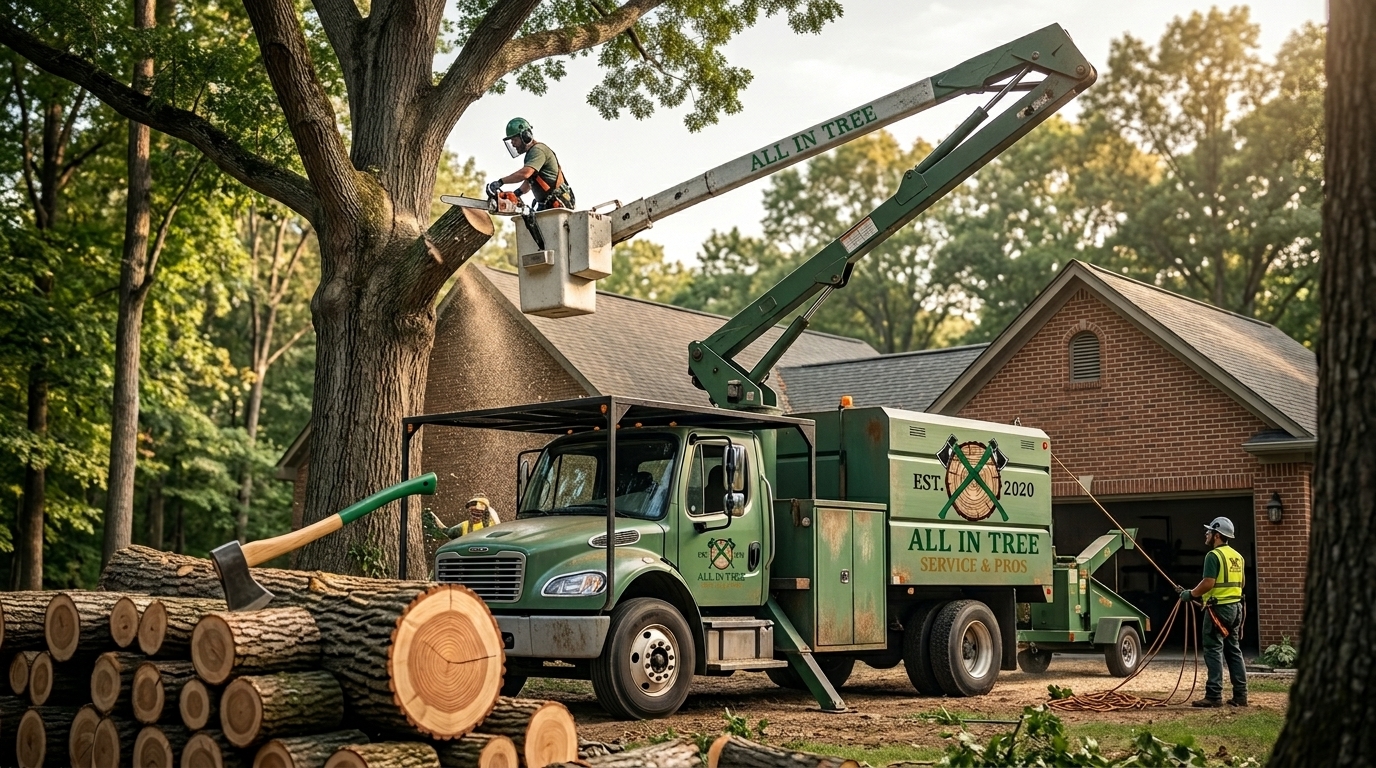
Hiram has some impressive red oaks, white oaks, and water oaks. These trees get massive — 3- to 4-foot trunk diameters are not unusual on properties that have been wooded for decades. An oak that size growing 15 feet from a house puts thousands of pounds of wood directly over the roof.
We remove oaks in Hiram when they are dead, declining, or structurally compromised. We also remove healthy oaks when the risk to a home, garage, or outbuilding outweighs the benefit of keeping the tree. That is a conversation I have with homeowners on nearly every job. I give you the honest assessment and let you make the call.
Dead Trees Along Property Lines
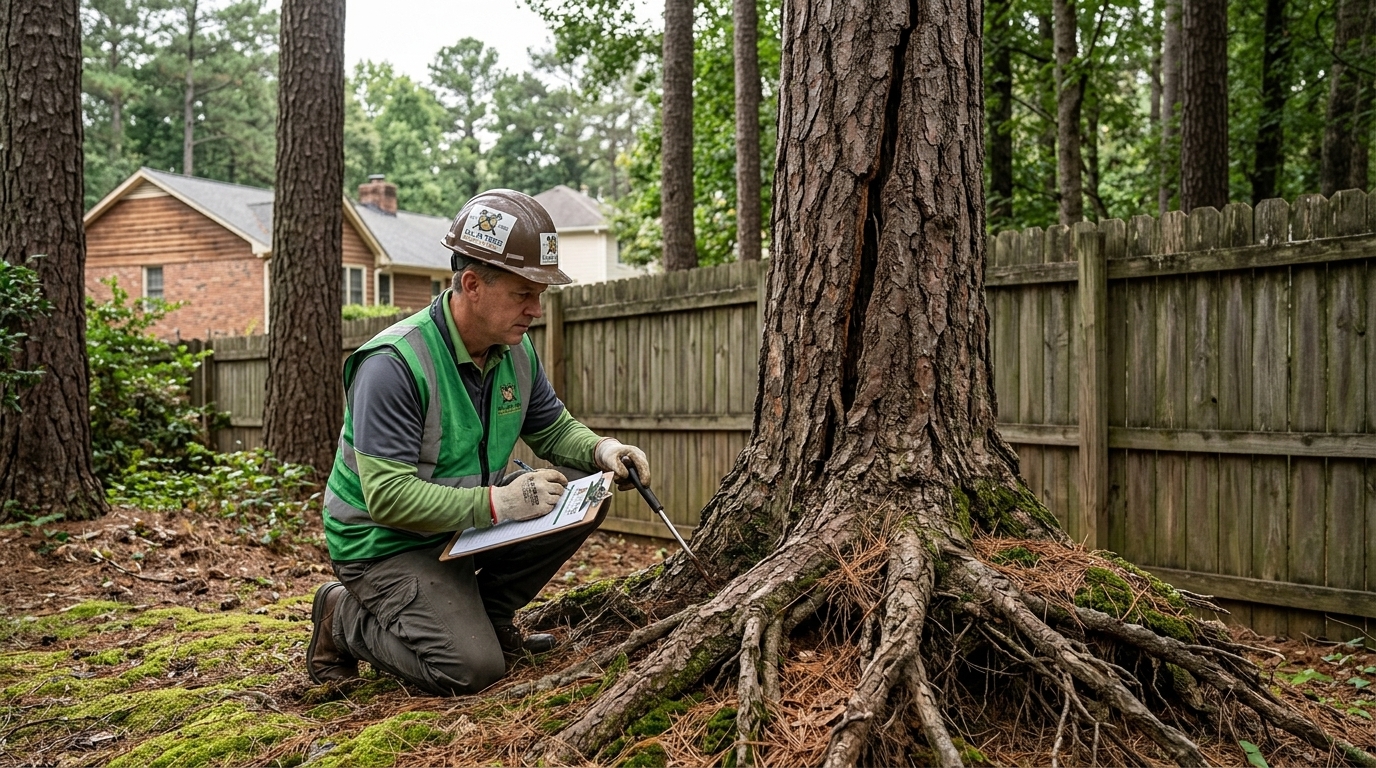
Hiram properties tend to have wooded buffers between neighbors. Those tree lines collect dead trees that nobody notices until one falls. A dead pine or oak along a property line can drop onto a fence, shed, or vehicle parked in a side yard. If you have not walked your property line in a while, it is worth a look. We remove dead trees from property-line tree lines regularly, and the access is usually straightforward on Hiram lots because there is room to work.
Last spring, we walked a property off Jimmy Lee Smith Road where the homeowner had three dead loblolly pines along the back fence line. Two were already leaning toward the neighbor’s storage building. The homeowner had noticed them months ago but figured they would hold. We took all three down in a day, rigged away from the structure, and chipped the debris on site. That job would have been a much bigger problem — and a much bigger bill — if one of those pines had come down on its own.
Tree Trimming in Hiram: Seasonal Timing and Clearance
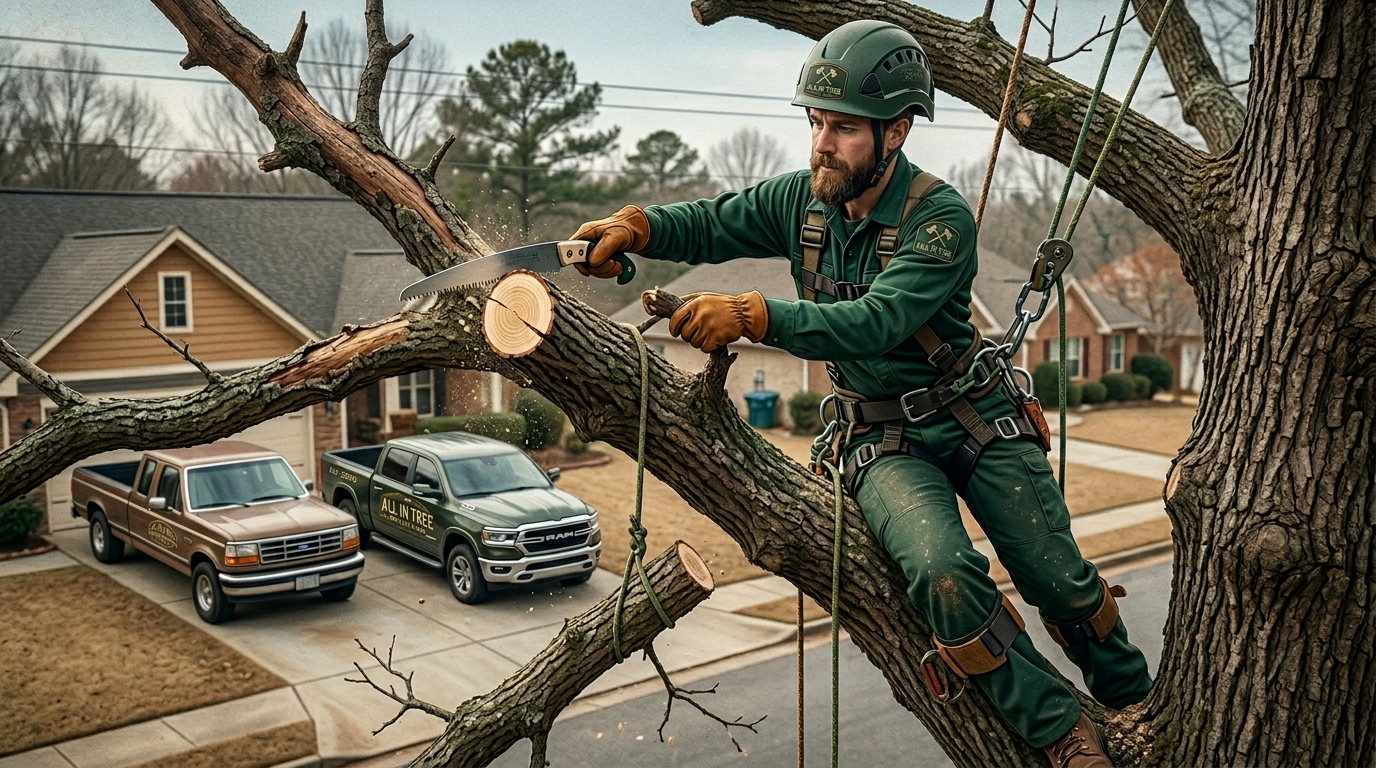
Regular tree trimming keeps your trees healthy and reduces the chance of storm damage. In Hiram, trimming serves two main purposes: maintaining clearance from structures and power lines, and removing deadwood before it falls.
Best Time to Trim in Hiram
The ideal window for most tree trimming in Georgia is late November through February, during the dormant season. Trees handle pruning cuts better when they are not actively growing, and diseases spread less aggressively during cooler months. For a full species-by-species breakdown, see our seasonal trimming guide.
That said, deadwood removal and hazard trimming can happen any time of year. If a dead branch is hanging over your roof in July, you do not wait until December to deal with it.
Clearance From Structures
On larger Hiram lots, trees and structures end up growing into each other over time. Branches extend over rooflines, limbs press against gutters, and canopy growth creeps closer to the house every year. We trim for clearance to create a safe gap between the tree and the structure — typically 8 to 10 feet of space between branch tips and the roof. This gives you room for wind sway during storms and keeps organic debris off the shingles.
Power Line Clearance
Many Hiram properties have overhead power lines running along the road or between poles on the property. Trees growing into power lines are a fire risk and an outage risk, and they are a common cause of post-storm service interruptions in Paulding County.
If a tree on your property is touching or growing into power lines, do not attempt to trim it yourself. Georgia Power handles vegetation management on their primary lines, but trees growing into the service drop (the line from the pole to your house) are usually the homeowner’s responsibility. We trim around service drops regularly and coordinate with the utility when the work involves primary conductors.
Crown Thinning and Weight Reduction
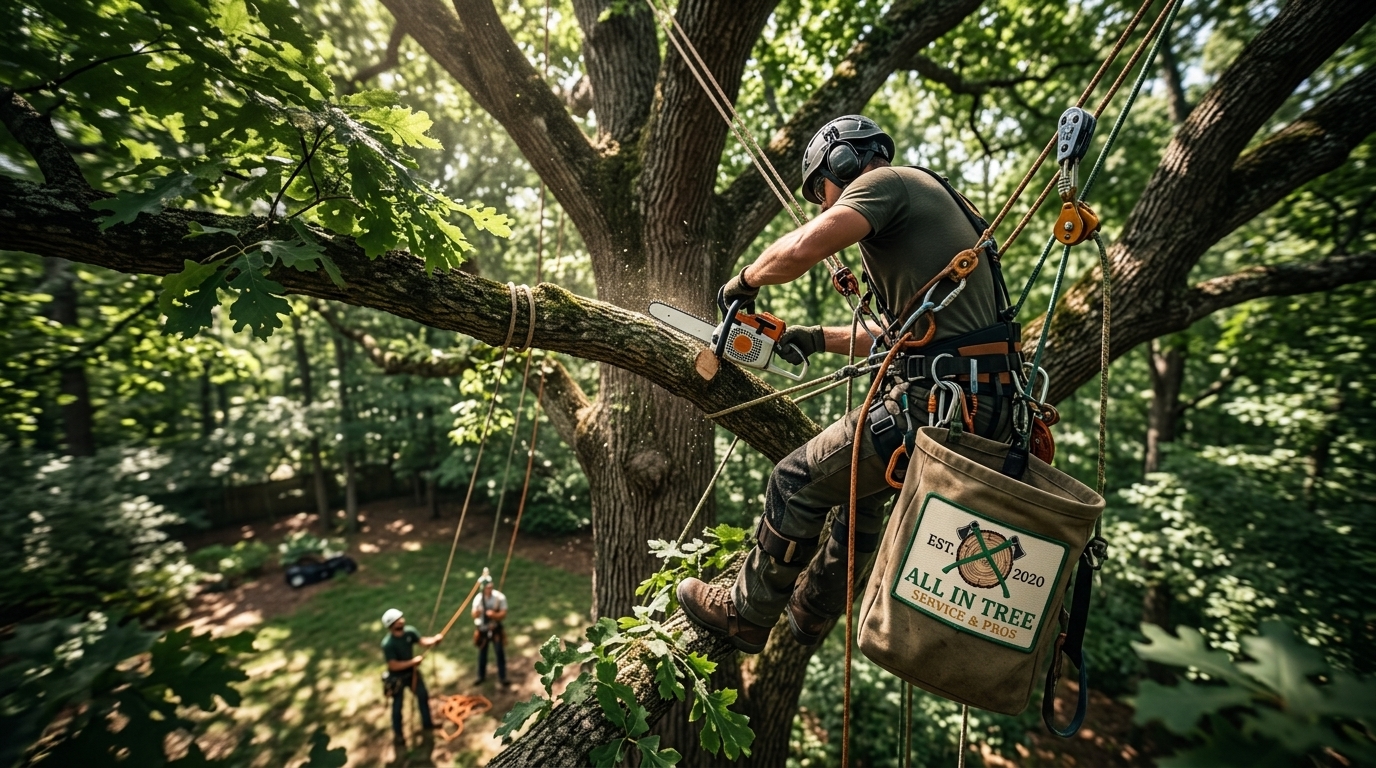
For large hardwoods on Hiram properties, crown thinning removes select interior branches to reduce canopy density. This allows wind to pass through the crown rather than catching it like a sail. Crown thinning is one of the most effective storm-prep measures you can take on a mature oak or hickory, and it preserves the tree’s shape and health while reducing the load on major limbs.
I always tell customers: tree work is cheaper and safer before it turns into an emergency. A trimming visit every 3 to 5 years on your large trees costs a fraction of what an emergency removal runs after a storm brings down a limb — or the whole tree.
Paulding County Tree Removal Considerations
Paulding County may have regulations that apply to tree removal on your property, depending on the location, the size of the tree, and the scope of the work. Requirements can change, and specific rules may differ based on zoning or whether the property falls within city limits versus unincorporated county land.
I keep this section general on purpose. The responsible advice is: check with Paulding County code enforcement for current requirements before removing large trees from your property. You can reach Paulding County Community Development for guidance on any permits or notifications that might apply to your situation.
We handle tree removal in Paulding County regularly and can point you in the right direction if you have questions about the process for your specific property. Our crew takes care of the tree work. You handle any county paperwork, and we are happy to help you understand what may be needed.
Storm Damage Response: Hiram’s Exposure to Northwest Georgia Storms
Hiram catches weather that tracks through northwest Georgia before reaching the metro area. Severe thunderstorms, straight-line wind events, and the occasional tornado move through Paulding County every spring and summer. The open terrain in this part of the county offers less protection than the dense tree canopy and taller structures found closer to Atlanta.
What Storm Damage Looks Like in Hiram
The most common storm damage we respond to in Hiram involves:
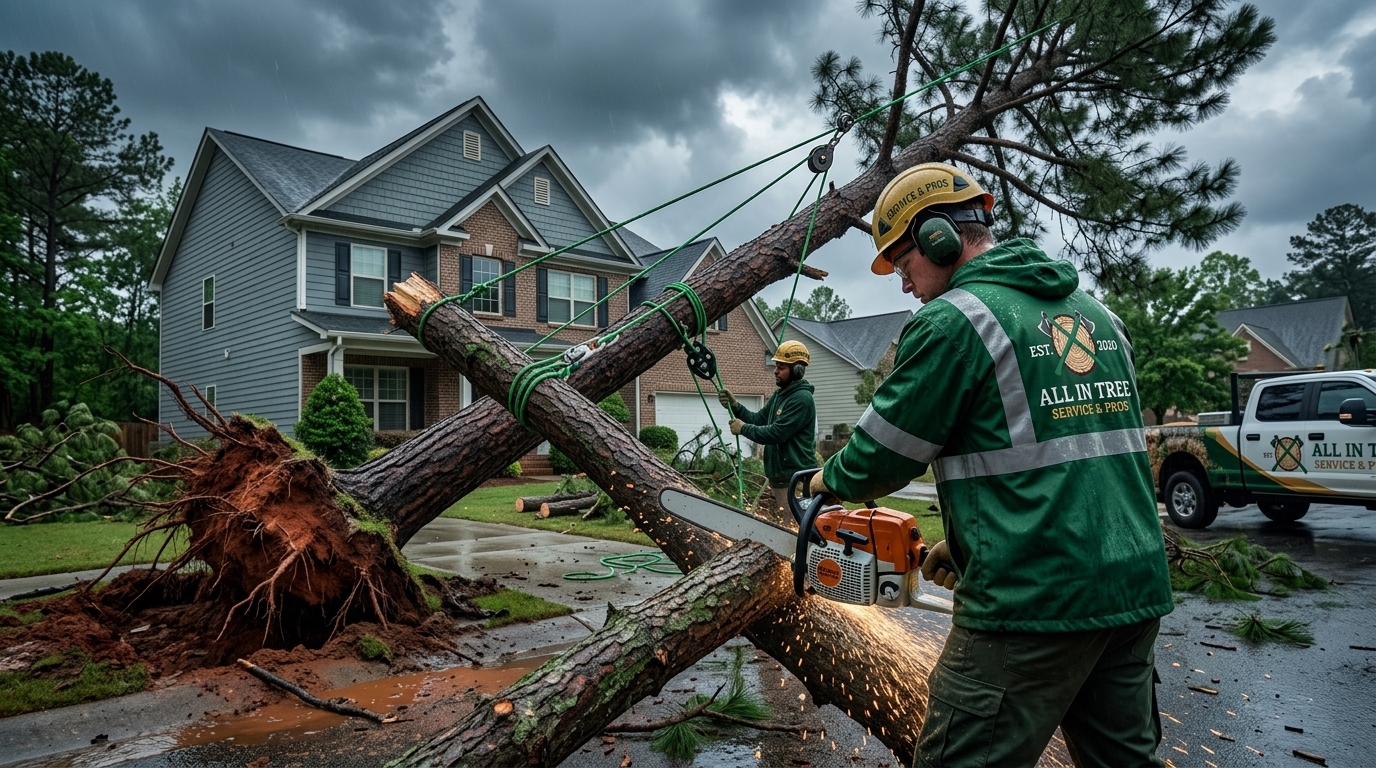
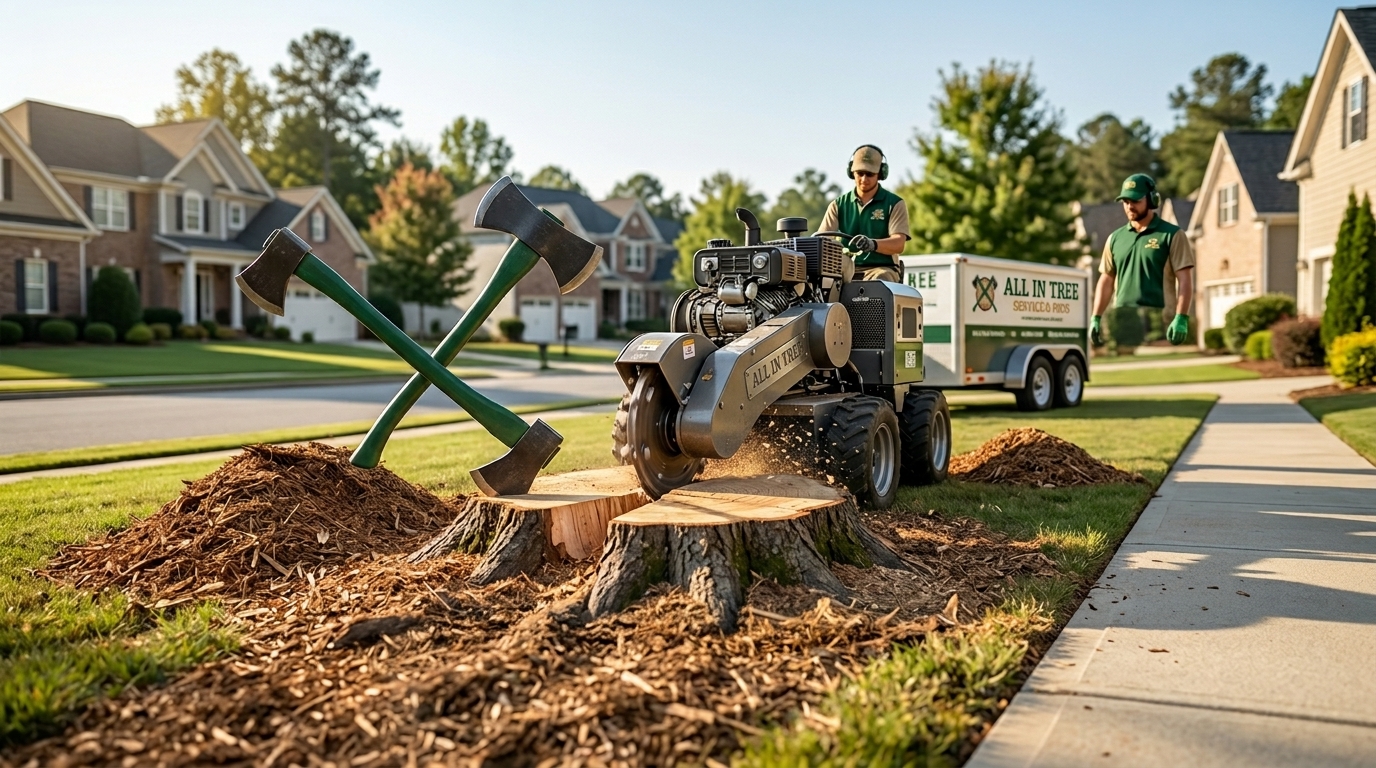
- Uprooted pines. Shallow root systems combined with saturated clay soil and high winds pull pines over at the base. A 70-foot pine uprooted in a storm lands well beyond the distance most homeowners expect.
- Broken oak limbs. High winds snap major branches from mature oaks. A single limb on a large oak can weigh several hundred pounds and cause serious structural damage when it hits a roof.
- Topped or snapped trunks. Tornadoes and straight-line winds over 70 mph snap tree trunks mid-height, leaving jagged, unstable stumps that still need professional removal.
Hanging limbs. Branches that cracked during the storm but did not fall. These “widow makers” hang in the canopy under unpredictable tension and can fall hours or days after the storm passes.
Emergency Tree Service in Hiram
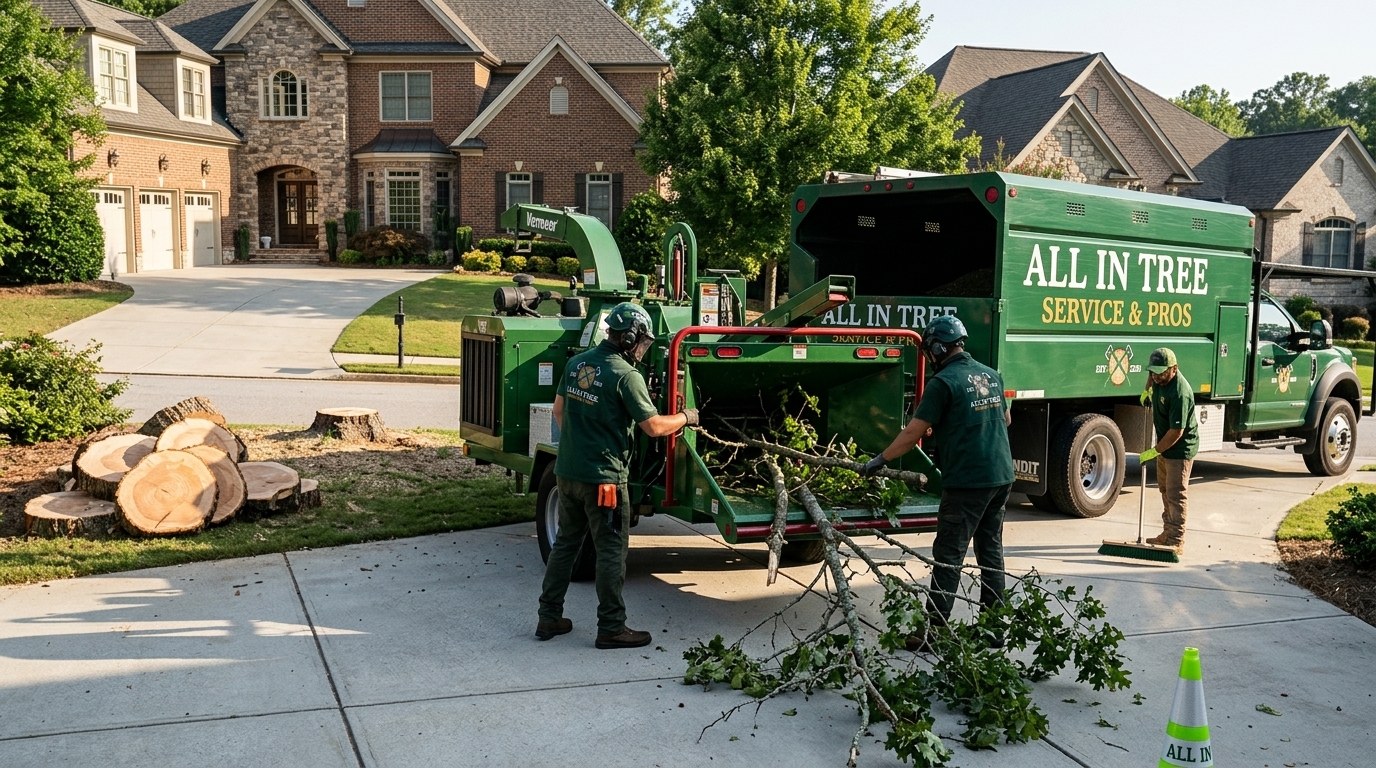
We provide 24/7 emergency tree removal for Hiram and all of Paulding County. When a tree lands on your house, blocks your driveway, or threatens a power line, we get a crew out as quickly as conditions allow.
After a major storm, every tree service in the area is fielding calls at the same time. We prioritize trees on structures and near power lines first. Trees down in the yard with no immediate threat to people or property may wait a day or two. I would rather be honest about response times than make promises I cannot keep.
What to do while you wait:
- Stay away from the tree, especially if it is near power lines
- Take photos and video from a safe distance for your insurance company
- Call your insurer to start a claim
- Do not try to cut or move any part of a large fallen tree yourself
If you have storm damage on your Hiram property, call (404) 882-6177. We will get you on the schedule and give you an honest timeline.
Choosing a Tree Service Company in Hiram
Hiram gets its share of out-of-town tree companies, especially after big storms. Some are legitimate. Others show up with a truck and a chainsaw, collect cash, and disappear. Here is what to check before you hire anyone.
Insurance. Any tree company working on your property should carry general liability insurance and workers’ compensation. If an uninsured crew member gets hurt on your property, you could be liable. Ask for a certificate of insurance and call the insurer to verify it is current. We wrote a full guide on this: how to verify tree service insurance.
Written estimates. Get the scope of work and the price in writing before any cutting starts. A handshake quote with no documentation is a red flag.
Local presence. A company that operates in your area year-round has a reputation to protect. We serve Hiram from our Powder Springs headquarters and have a Google Business Profile specifically for Hiram. We are not passing through.
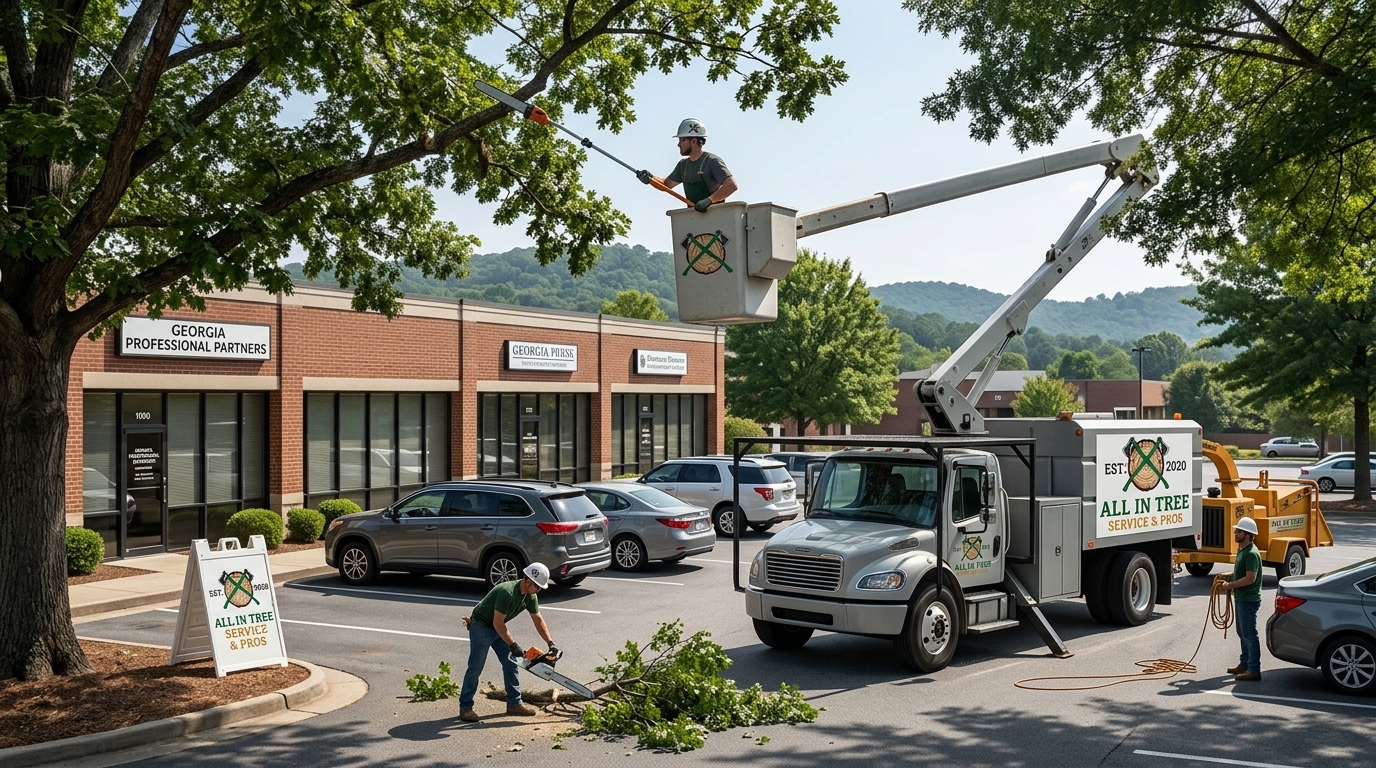
Equipment. Look at the truck, the chipper, and the rigging. Professional tree removal requires real equipment. A pickup truck with a chainsaw in the bed is not a tree service operation.
No door-knocking after storms. Legitimate tree companies do not knock on doors the morning after a storm offering cash deals. If someone shows up unsolicited, get their business card and check their reviews and insurance before agreeing to anything.
References and reviews. Check Google reviews. Ask neighbors in Hiram who they have used. Word of mouth in a community this size is usually the most reliable filter.
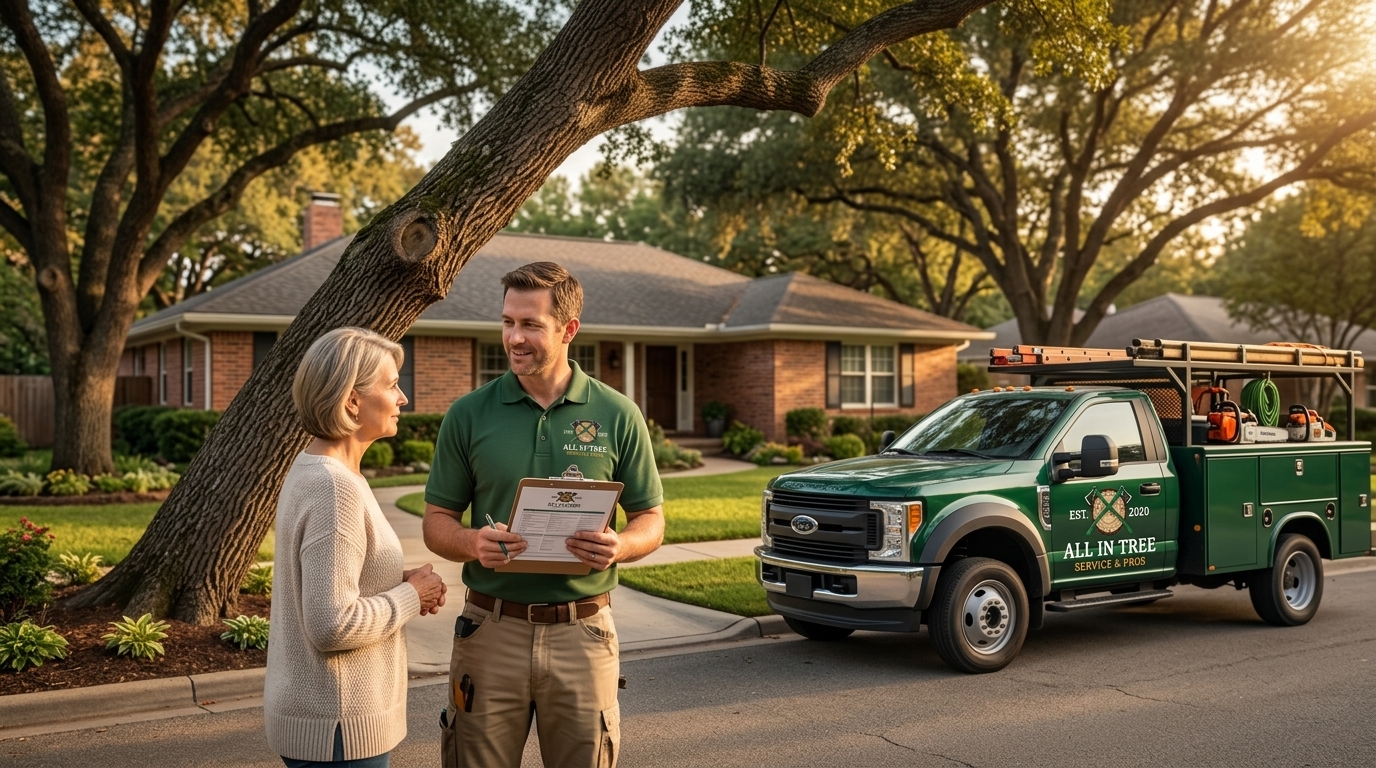
We have been working Hiram properties for years. Our crew knows the area, the tree species, and the access challenges on Paulding County lots. Call (404) 882-6177 to schedule a free estimate.